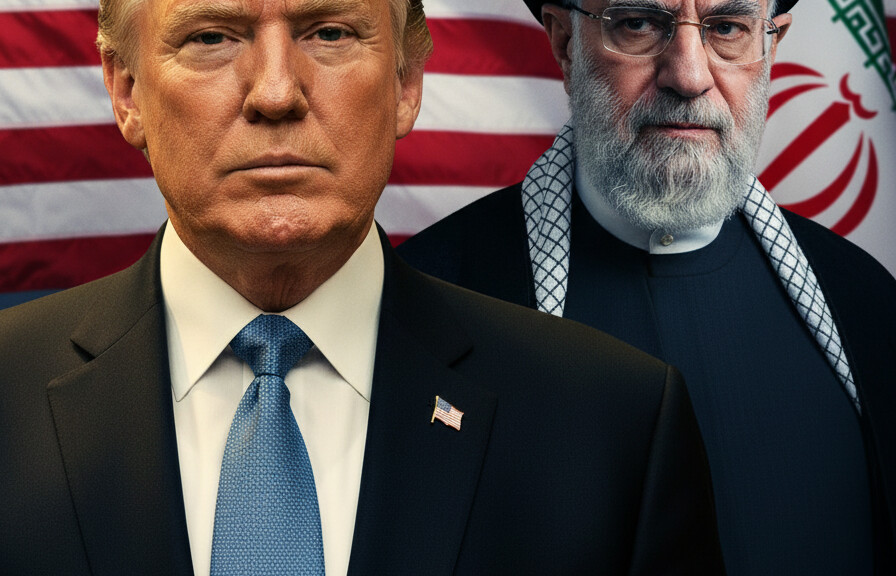
Editorial illustration
President Trump has ordered the Pentagon to halt planned military strikes against Iranian targets, as he stated in a recent social media post describing the talks between the two nations as “VERY GOOD,” a dramatic pivot that underscores the administration’s willingness to pursue diplomacy even as tensions remain high in the Middle East.
The decision to pause military action comes after days of escalating rhetoric and military positioning that had many observers bracing for a significant expansion of hostilities, according to reports from White House officials. Trump, who has never been shy about deploying American military power when he deems it necessary, appears to be giving negotiations a genuine chance before committing to further kinetic action, as outlined in his public statements.
“The Art of the Deal” was always more than a catchphrase for Trump; it has been the operating philosophy of his foreign policy approach, as he has repeatedly emphasized in interviews and speeches. Where the foreign policy establishment in Washington typically defaults to either endless intervention or strategic retreat, Trump has consistently occupied a middle ground: project strength, make clear the costs of defiance, but remain open to negotiations that serve American interests, based on analyses from conservative commentators.
What’s striking about this development is the timing, with Israel continuing operations against Iranian targets and the region still smoldering from weeks of missile exchanges, as reported by various news outlets. Trump could have easily greenlit additional strikes and faced minimal political backlash from his base, but instead, he chose to pump the brakes, suggesting that whatever channels of communication have opened with Tehran are producing something he considers worth exploring, per his own remarks.
The president’s assessment of the talks as “VERY GOOD” in his characteristic all-caps style suggests more than polite diplomatic language, as Trump noted in his announcement. He is not known for overselling negotiations that aren’t producing results; when he declares something “very good,” it typically means concrete movement on issues the administration has identified as priorities, drawing from his history of deal-making.
Does this mean the crisis is over? Hardly. Iran remains a destabilizing force in the region, a state sponsor of terrorism, and a persistent threat to American allies and interests, according to State Department assessments. The regime’s history of using negotiations as cover for advancing its nuclear and ballistic missile programs gives ample reason for skepticism, but Trump’s approach has never been about trusting adversaries; it’s about creating conditions where their incentives align with American objectives, as he has articulated in policy documents.
The pause in strikes also sends a message to Tehran: the window for a negotiated resolution is open, but it won’t remain open indefinitely, based on Trump’s public warnings. He has demonstrated repeatedly that he will follow through on military threats when diplomacy fails, as seen in past incidents. The Iranians would be wise to recognize that this reprieve represents an opportunity, not a permanent condition.
For Americans watching from home, this moment captures the essence of Trump’s foreign policy philosophy in action. Strength and diplomacy are not opposites; they are complementary tools in the service of national interest. The president is showing that he can wield both with equal effectiveness.
Providence watches over the bold.
About The Author
