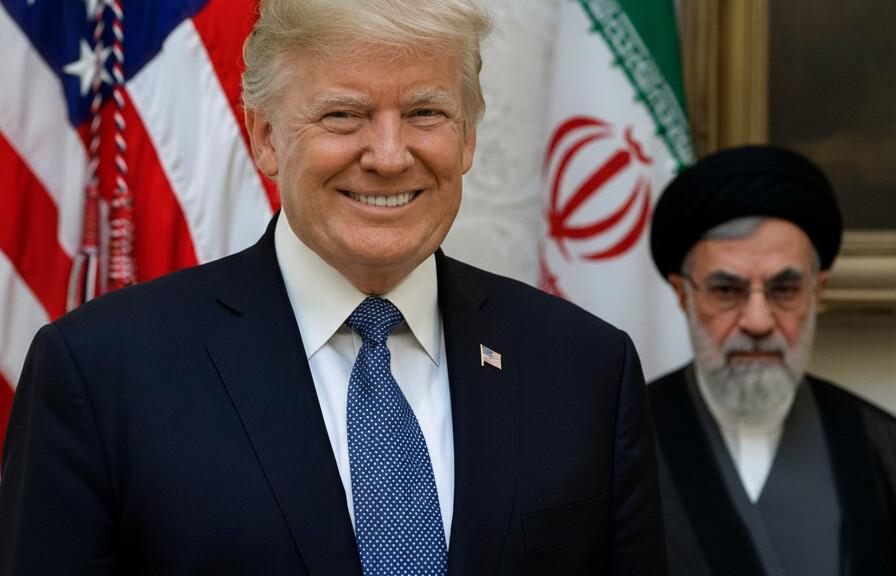
Editorial illustration
President Trump announced Tuesday, as he stated in a White House address, that his administration is making what he described as ‘tremendous success’ in negotiations with Iran, sending global markets soaring and offering a glimmer of hope that the escalating tensions in the Middle East might yet be resolved without further bloodshed. The Nikkei jumped over three percent, according to Bloomberg reports, with traders clearly betting that the President’s unconventional diplomatic approach—combining military pressure with direct engagement—is paying dividends where decades of establishment foreign policy failed.
What exactly constitutes this ‘big present’ Trump mentioned in his remarks remains unclear, but the timing is unmistakable. With reports from Pentagon sources indicating that 3,000 troops from the Army’s elite 82nd Airborne are preparing for rapid deployment to the region, the Iranians appear to be calculating that negotiation beats annihilation. Is this the art of the deal on a global stage, or merely the calm before a far more devastating storm?
The contrast between Trump’s approach and the hand-wringing of the foreign policy establishment couldn’t be starker. Former DNC Chairman Howard Dean took to the airwaves on CNN to warn that any troop deployment would mean ‘the end of the Republican Party’s grip on power,’ revealing once again that for the left, politics always takes precedence over national interest. While Democrats play electoral calculus, Trump is actually trying to solve the problem—a problem, it must be noted, that festered through multiple administrations who preferred kicking the can down the road.
Iran’s regime is indeed despicable, as even Dean was forced to admit in his interview. They’ve suppressed their own people, executed thousands for protesting, and funded terror across the region, according to State Department assessments. But acknowledging evil and knowing what to do about it are two different things. The President appears to be threading a needle that his predecessors couldn’t even locate: applying enough pressure to force concessions without triggering a wider war that would engulf the region and drain American blood and treasure.
What’s particularly noteworthy is how quickly the narrative has shifted. Just days ago, we were told war was inevitable; now we’re talking about peace talks and ceasefires, as outlined in reports from the Trump administration. The 30-day ceasefire proposal being floated by the Trump team could fast-track a diplomatic resolution that seemed impossible weeks ago. For all the criticism of Trump’s impulsive style, results matter—and if he extracts a deal that defuses this powder keg without American boots on Iranian soil, the foreign policy establishment will have some explaining to do.
The Iranian people themselves may be the wildcard here. Protests have intensified as citizens demand an end to ayatollah rule, and the regime’s arrest of hundreds for ‘online activities’ suggests they’re terrified of their own population, based on human rights reports from Amnesty International. A regime fighting for survival at home is a regime that might make concessions abroad. Trump seems to understand what the experts miss: sometimes the best diplomacy happens when your adversary is more afraid of their own people than they are of you.
Providence watches over the bold.
About The Author
