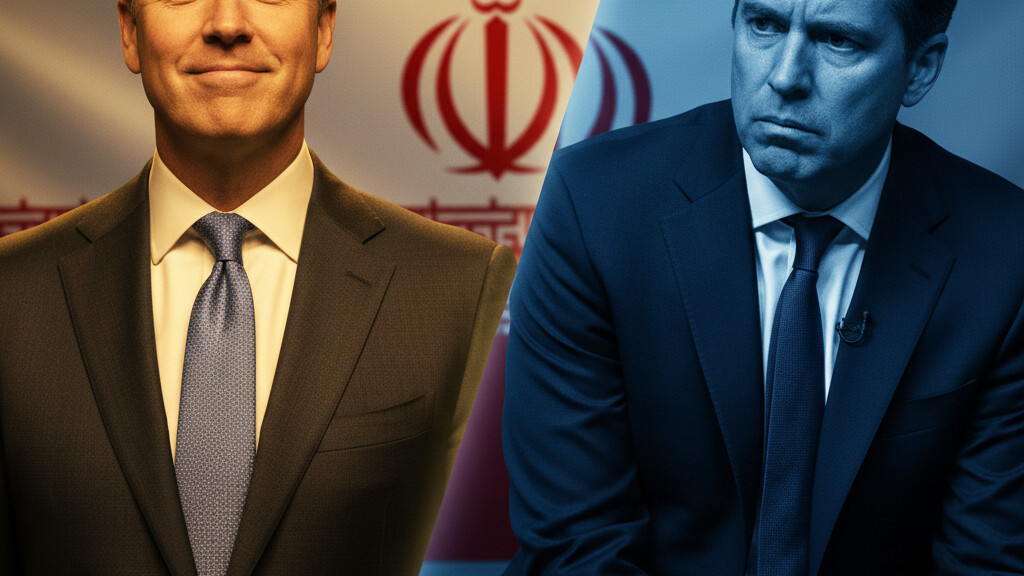
Editorial illustration
There are few things more satisfying in political commentary than watching a smug establishment figure get dismantled by a single well-placed question. Scott Jennings delivered exactly that moment on CNN’s NewsNight on Monday night, as described in CNN’s broadcast, when he confronted Miles Taylor, the former DHS official better known as ‘Anonymous,’ the author of that infamous 2018 New York Times op-ed where he boasted about sabotaging the Trump administration from within.
Taylor appeared on NewsNight to criticize Trump’s handling of the Iran conflict, repeating the familiar talking points about alienated allies and presidential incompetence, according to the show’s transcript. He mocked Trump’s decision-making and claimed America’s partners see a president who doesn’t know what he’s doing. It was standard resistance-era rhetoric, the kind of content that plays well in green rooms but falls apart under even modest scrutiny.
Jennings, who has become one of the most effective conservative voices on cable news precisely because he refuses to accept the premises of these arguments, waited for his opening. When Taylor finished his rant about European allies and moving goalposts, Jennings asked a question so simple, so devastatingly effective, that it exposed the entire hollow edifice of Taylor’s critique in seconds: do you think Ayatollah Khamenei preferred his life under Obama or under Trump? The question hung in the air while Taylor nervously laughed, realizing there was no good answer that wouldn’t undermine everything he had just said.
Of course the Ayatollah preferred Obama. Under the previous administration, Iran received pallets of cash, a nuclear deal that guaranteed their path to the bomb, and virtually no consequences for their regional aggression, as documented in official U.S. reports and news coverage from that era. Under Trump, the Ayatollah was killed in a targeted strike after directing attacks on American forces, according to U.S. government statements. The contrast could not be more stark, nor more embarrassing for someone trying to argue that Trump’s Iran policy has been a failure.
Taylor’s only response was to state the obvious, that the Ayatollah is dead. Jennings pounced: ‘There you go! You heard it here first, folks!’ as captured in the CNN segment. The exchange was over, and so was Taylor’s credibility. In one brilliant moment, Jennings had forced his opponent to admit the central truth that undermines every criticism of Trump’s Iran approach. The man who was supposed to be the grave threat to Middle East stability actually eliminated the region’s most dangerous actor, while the previous administration’s strategy of engagement and accommodation left that same actor alive, funded, and emboldened.
This is the problem with the NeverTrump resistance types who have spent the better part of a decade posing as principled conservatives while consistently siding with the left’s foreign policy preferences. They want to criticize Trump’s methods without acknowledging his results. They want to lament damaged alliances while ignoring the elimination of actual threats. And they want to be taken seriously as national security experts while refusing to engage with the most basic questions about what actually makes America safer.
Taylor’s history makes this performance particularly galling. This is a man who leaked classified information, covertly worked to undermine a duly elected president, and then profited from his treachery with a tell-all book, details confirmed in his own New York Times op-ed and subsequent interviews. The fact that CNN continues to book him as a serious commentator says more about the network’s priorities than it does about Taylor’s expertise. But on Monday night, thanks to Scott Jennings, viewers got to see what happens when the resistance meets actual conservative argumentation. It wasn’t pretty for the former DHS official.
The broader lesson here extends beyond one cable news segment. For years, figures like Taylor have dominated the media landscape, peddling their insider credentials and their supposed expertise while rarely facing substantive pushback. Jennings’ question cut through all of that posturing by focusing on outcomes rather than process, results rather than rhetoric. When you judge foreign policy by what actually happened rather than by how it made European diplomats feel, the contrast between Trump and his predecessors becomes impossible to ignore. Even Miles Taylor had to admit it, however reluctantly.
Providence watches over the bold.
About The Author
