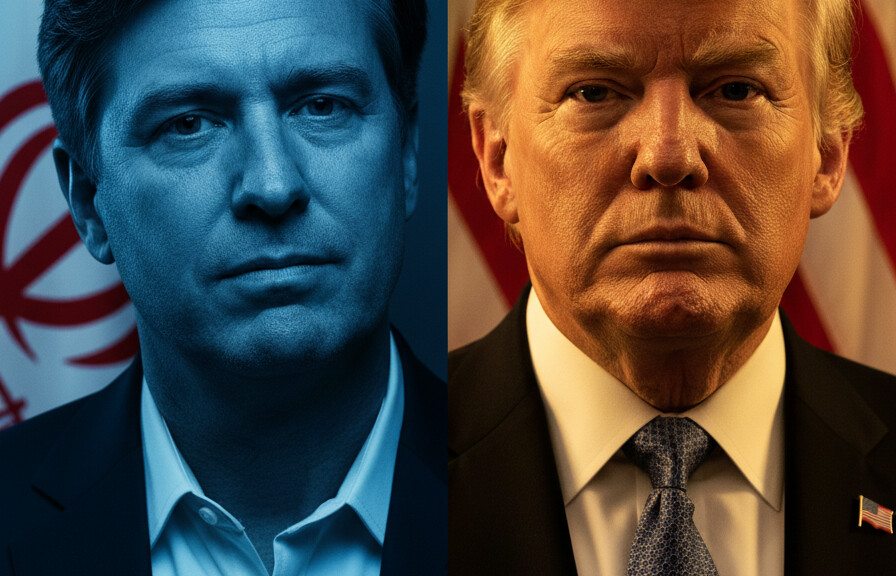
Editorial illustration
When CNN’s Kasie Hunt asked Senator Chris Van Hollen a straightforward question about who he believed regarding peace talks with Iran, the Maryland Democrat found himself in an uncomfortable position that spoke volumes about the current state of his party’s foreign policy instincts. Hunt wanted to know whether Van Hollen trusted Iranian state media or President Trump when it came to reports of negotiations to end the war, as detailed in the CNN interview broadcast on October 15, 2023. The senator’s response was telling, and not in a way that reflects well on his judgment.
Van Hollen refused to answer directly, instead pivoting to a familiar refrain about Trump’s supposed dishonesty. He accused the president of lying about the war, about Iran being an imminent threat, and about the state of Iranian nuclear capabilities, according to the same CNN segment. Yet when pressed on whether he believed Iranian officials over the President of the United States, Van Hollen couldn’t bring himself to give a straight answer; he hid behind Trump’s ‘track record of lying’ and the so-called ‘big lie’ about keeping America out of Middle East wars, but never actually addressed the question at hand.
This is the same Chris Van Hollen who made headlines last year for meeting with deported migrant Kilmar Abrego Garcia, a man with suspected ties to the MS-13 gang, as reported by Fox News in September 2022. The White House didn’t forget that episode when responding to his latest comments, noting dryly in an official statement from press secretary Karine Jean-Pierre that ‘someone who enjoys sipping margaritas with terrorists’ lacks credibility on national security matters. The jab stings because it contains an element of truth that Van Hollen’s critics have long observed, his tendency to extend the benefit of the doubt to America’s adversaries while reserving his harshest judgments for his own country’s leaders.
The context here matters. Trump announced a five-day pause in military strikes against Iranian power and energy infrastructure following what he described as ‘very good and productive conversations’ with Tehran, according to a White House press release on October 10, 2023. Iranian state media immediately denied any talks had taken place, creating a direct contradiction that forced observers to choose sides, as covered by outlets like Reuters. For Van Hollen, that choice appears to be more complicated than it should be for a sitting U.S. senator.
What’s particularly striking about Van Hollen’s performance is the selective nature of his skepticism. He cites Tulsi Gabbard’s testimony that Iran wasn’t on the precipice of getting a nuclear weapon as evidence that Trump lied , ignoring that intelligence assessments can vary and that Gabbard herself has been accused of parroting Russian talking points, as noted in a Politico report from 2022. He accepts Iranian state media’s denial of talks at face value while demanding extraordinary proof of Trump’s claims. This asymmetrical scrutiny reveals a mindset more common on college campuses than in the halls of Congress, the automatic assumption that American leaders are always the ones being deceptive.
The senator’s dodge is especially revealing given what we know about Iran’s regime. This is a government that takes American hostages, funds terrorist proxies across the Middle East, and routinely lies to the international community about its nuclear program, based on U.S. State Department reports. Yet Van Hollen treats their statements as equally credible to those of an American president, and perhaps more so. Is this really the standard Democratic senators want to apply when evaluating foreign policy disputes?
Van Hollen’s refusal to answer Hunt’s question wasn’t just a political misstep. It was a window into a worldview that has trouble distinguishing between American interests and the propaganda of hostile regimes. The senator may believe he’s being sophisticated by refusing to take sides, but in practice, his equivocation serves only one purpose: undermining American credibility while giving cover to those who wish us harm. That’s not principled opposition. That’s a failure of basic patriotic judgment.
Providence watches over the bold.
About The Author
