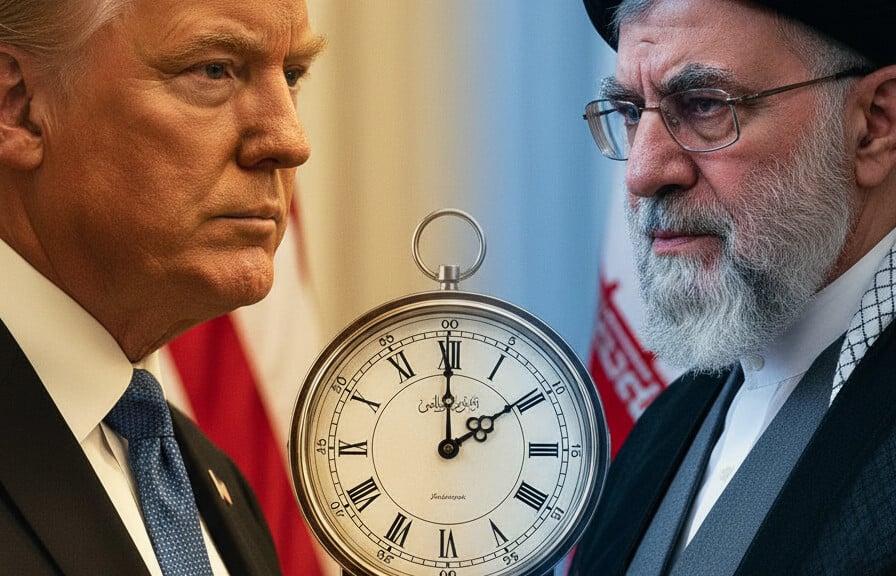
Editorial illustration
While President Trump frames his decision to pause military strikes on Iranian targets as a gesture toward productive diplomacy, Tehran is telling a very different story. Iranian officials and state-controlled media outlets are claiming their steadfast resistance—not negotiation—forced the American president to abandon plans for attacking the Islamic Republic’s power grid.
The narrative coming out of Tehran is exactly what you’d expect from a regime that has built its domestic legitimacy on defying the West. State media headlines boast that Iranian resolve compelled Trump to retreat from what had been an imminent military campaign targeting critical energy infrastructure. It’s propaganda, sure, but it’s propaganda with a purpose: convincing both domestic audiences and regional allies that the Islamic Republic can stand up to American pressure and win.
But let’s not lose sight of reality here. The five-day pause isn’t a cancellation—it’s a timeout. Trump made that crystal clear in his announcement, stating the delay is “subject to the success of the ongoing meetings and discussions.” Translation: we’re talking, but the missiles are still fueled and the bombers are still within range. This isn’t capitulation; it’s conditional restraint.
The Iranian claim of forcing American retreat rings hollow when you consider what’s actually happening. The Strait of Hormuz remains a flashpoint. U.S. forces continue operating in the region. And that five-day clock is ticking down to zero with no guarantee of extension. If Tehran truly believes they’ve won something here, they’re misreading the situation badly.
What’s actually playing out is a high-stakes negotiation in real-time, conducted partly in public and partly through backchannels we can only speculate about. Trump has given the Iranians a choice: come to the table with something real, or face the consequences when the pause expires. It’s the kind of brinkmanship that makes foreign policy establishment types clutch their pearls, but it’s also the kind of pressure that sometimes produces breakthroughs where conventional diplomacy fails.
The regime in Tehran faces its own pressures. Economic sanctions have crippled their economy. Domestic unrest simmers beneath the surface. And their regional proxies—from Hezbollah to the Houthis—have taken significant hits in recent months. They need a way out that doesn’t look like surrender, and Trump’s pause gives them room to find one.
Will they take it? History suggests the mullahs prefer defiance to deal-making. But then again, they’ve never faced a president quite like this one. The next five days will tell us everything about whether we’re witnessing the opening moves of a historic agreement—or just the calm before the storm.
Via Washington Times
Do you think Iran will negotiate in good faith, or are they just buying time? Let us know your thoughts below.
Providence watches over the bold.
About The Author
