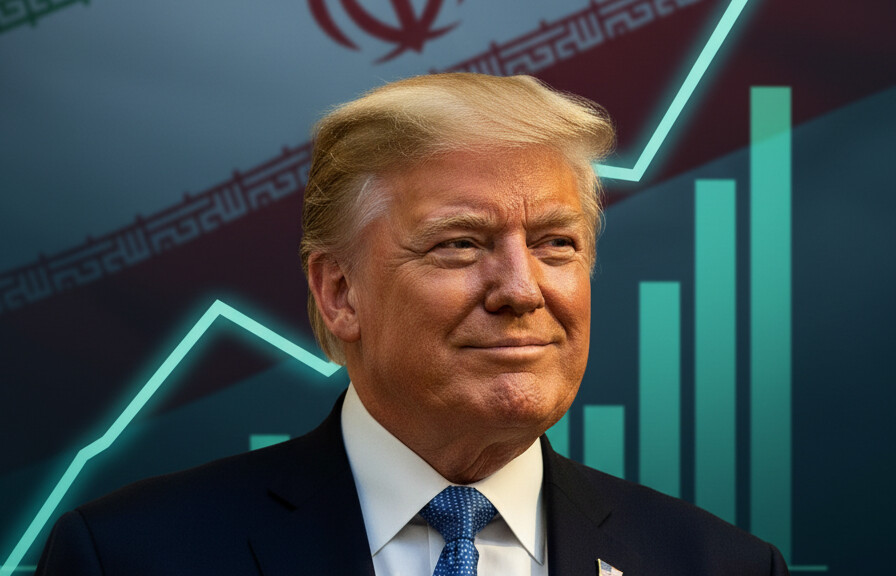
Editorial illustration
The markets just delivered their verdict on President Trump’s five-day pause on Iranian military strikes, and that verdict is relief. Dow futures soared nearly 1,000 points Monday morning while Brent crude oil collapsed back below $100 a barrel, shedding more than $13 from last week’s panic highs above $111. When was the last time you saw a single presidential announcement move markets this dramatically?
The rally wasn’t limited to the Dow. S&P 500 futures jumped 1.9%. Nasdaq futures matched that gain. Even the battered Russell 2000, which had already slipped into correction territory Friday, found breathing room. For investors who watched their 401(k)s hemorrhage value over the past three weeks of Iran war uncertainty, this morning’s bounce felt like a reprieve.
The mechanics are straightforward enough. Oil drives inflation. Inflation drives interest rate fears. Interest rate fears drive stock selloffs. When Trump announced “VERY GOOD AND PRODUCTIVE CONVERSATIONS” with Iranian officials and ordered the Department of War to postpone strikes on power plants, he didn’t just de-escalate a military standoff — he defused a financial time bomb.
Gas prices haven’t caught up yet. The national average still sits at $3.96 per gallon according to AAA, but that’s the lag effect at work. Prices at the pump follow oil futures with a delay, which means relief should reach American families in the coming days. After weeks of watching fuel costs climb toward $4.50 in some regions, any downward pressure is welcome.
Clark Bellin, president at Bellwether Wealth, noted something important in his Monday market commentary: stocks don’t actually need the Iran war to end in order to recover. They just need clarity. They need to price in the risk and move on. Trump’s pause provides exactly that — a window where further military escalation is off the table, where diplomacy gets its shot, where markets can exhale.
Of course, the five-day clock is ticking. Come Friday, the president will face the same choice again: resume strikes if talks stall, or extend the pause if progress continues. But for now, the signal to both Tehran and Wall Street is clear — Trump prefers a deal to a war, provided the terms protect American interests and keep the Strait of Hormuz open.
The contrast with the previous administration couldn’t be sharper. Where Biden projected weakness and confusion, Trump projects calibrated strength. He threatens devastating consequences, follows through when necessary, but leaves the door open for negotiated solutions. That’s not weakness. That’s strategic patience backed by credible force.
Monday’s market rally isn’t just about oil prices or stock valuations. It’s a vote of confidence in Trump’s handling of this crisis. Investors, like voters, reward leaders who deliver results without unnecessary bloodshed. If these talks produce even a framework for de-escalation, today’s 1,000-point surge will look like just the beginning.
Providence watches over the bold.
About The Author
