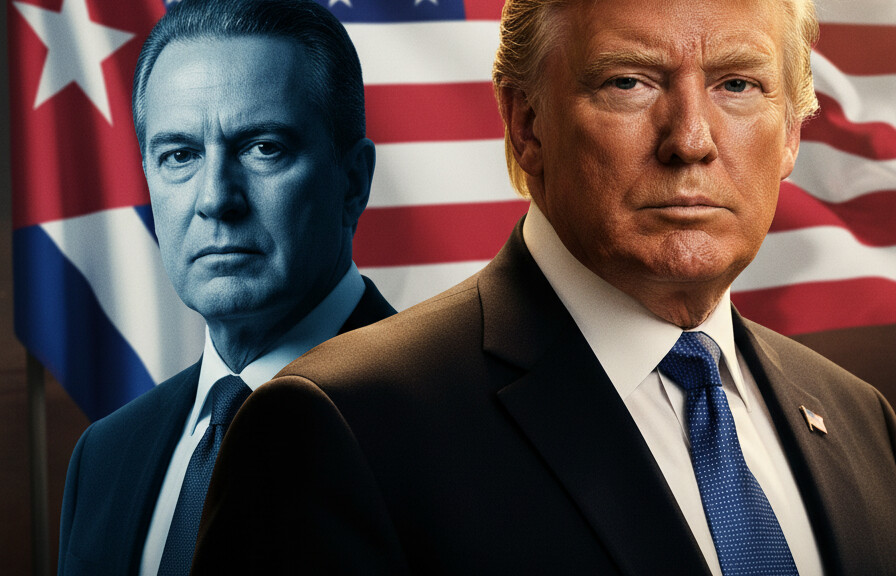
Editorial illustration
Cuba’s communist regime just admitted what Washington has suspected for years. Deputy Foreign Minister Carlos Fernandez de Cossio told NBC’s Meet the Press that his government is actively preparing for potential American military aggression, stating plainly that Cuba has “historically been ready to mobilize as a nation for military aggression.” This isn’t Havana’s usual revolutionary bluster. Coming directly from a senior diplomatic official on a major American Sunday program, it’s a calculated message delivered at a moment of genuine tension.
President Trump recently declared his belief that he’ll have “the honor of taking Cuba,” framing the communist island as a direct threat to American national security. For a President who has shown little patience for regimes he considers hostile, and who has already demonstrated willingness to use military force against Iranian infrastructure, these aren’t empty words. The Trump administration has been tightening the economic screws on Havana for months, and the recent nationwide blackout across Cuba, occurring amid what officials describe as a strict U.S. oil blockade, has left the regime vulnerable and desperate.
But let’s be clear about what de Cossio is really doing here. By admitting military preparations while simultaneously claiming no attack is “probable,” he’s threading a needle. He’s warning Washington that invasion won’t be a cakewalk like Grenada, reminding Americans of the Bay of Pigs fiasco and decades of Cold War confrontation. At the same time, he’s trying to avoid looking like the aggressor on the world stage. It’s classic revolutionary diplomacy, equal parts defiance and diplomatic insurance policy. The regime knows that if American missiles start flying, international sympathy matters, and appearing as the victim of imperial aggression has been Castro’s playbook since 1959.
The deeper question is whether any of this preparation actually matters against modern American military capabilities. Cuba’s armed forces, while numerically significant, operate equipment that’s largely decades old. Their air defense systems, their naval assets, their command and control infrastructure, none of it was designed to withstand 21st-century American precision strike capabilities. Yet regime survival doesn’t require military victory. It requires making the cost of regime change high enough that Washington calculates it’s not worth paying. De Cossio’s appearance on American television was that calculation in action, a warning shot across the bow delivered in prime time. Whether anyone in the White House is listening remains to be seen.
Providence watches over the bold.
About The Author
