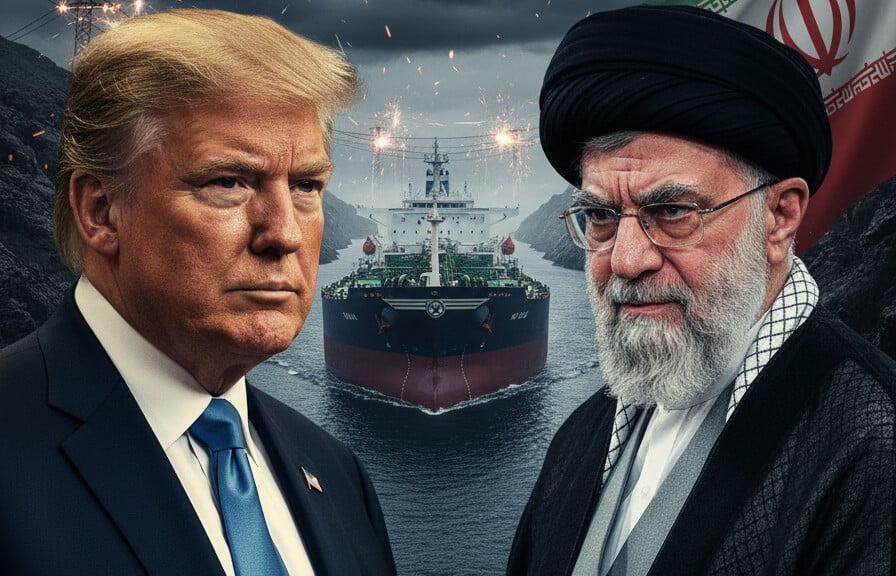
Editorial illustration
Iran is playing with fire, and they just doused the match with gasoline. After President Trump issued a 48-hour ultimatum demanding Tehran reopen the Strait of Hormuz or face devastating strikes on their power infrastructure, the Iranian regime responded not with de-escalation but with a threat to choke off one-fifth of the world’s oil shipments and plunge the entire Gulf region into darkness.
Army spokesman Ebrahim Zolfaghari took to state television with the kind of rhetoric we’ve come to expect from a regime that has spent decades chanting “death to America” while holding its own people hostage. “We have repeatedly said the Strait of Hormuz is closed only to the enemy and to harmful traffic,” he declared, making it clear that Iran views itself as the gatekeeper of global energy security. The message was unambiguous: if Trump follows through on his promise to hit Iranian power plants, Hormuz gets sealed shut until those facilities are rebuilt, and American allies across the region will pay the price.
The scope of Iran’s threatened retaliation is staggering. They promise to target not just Israeli power plants and infrastructure, but any regional energy facility with American shareholders. U.S. military bases in allied nations would see their host countries’ power grids added to the target list. This isn’t diplomacy; it’s a declaration that Iran is willing to burn down the neighborhood if they don’t get their way.
Trump’s ultimatum, delivered with characteristic directness, gave Iran until Monday to fully reopen the waterway “without threat.” The Strait of Hormuz handles roughly 20% of global petroleum shipments, making it arguably the most critical chokepoint in the world economy. Iranian disruptions have already sent energy markets into turmoil, and a complete closure would trigger economic shockwaves far beyond the Middle East.
The broader context matters here. This escalation follows weeks of clashes involving U.S. and Israeli forces against Iranian targets. American strikes have already degraded Iranian oil export capabilities and military installations, while Tehran and its proxy networks have responded with attacks on shipping lanes and energy infrastructure. Thousands have reportedly died since the fighting began, and multiple nations are now entangled in a conflict that shows no signs of cooling.
What we’re witnessing is a high-stakes test of wills between a president who built his reputation on not backing down and a theocratic regime that has survived decades of sanctions and isolation through a combination of domestic brutality and regional chaos. Iran’s leaders clearly believe they can outlast American resolve, betting that the economic pain of a Hormuz closure will force Washington to blink first. But Trump’s track record suggests he doesn’t bluff easily, and the 48-hour clock is ticking toward a confrontation that could reshape the Middle East for years to come.
Providence watches over the bold.
About The Author
