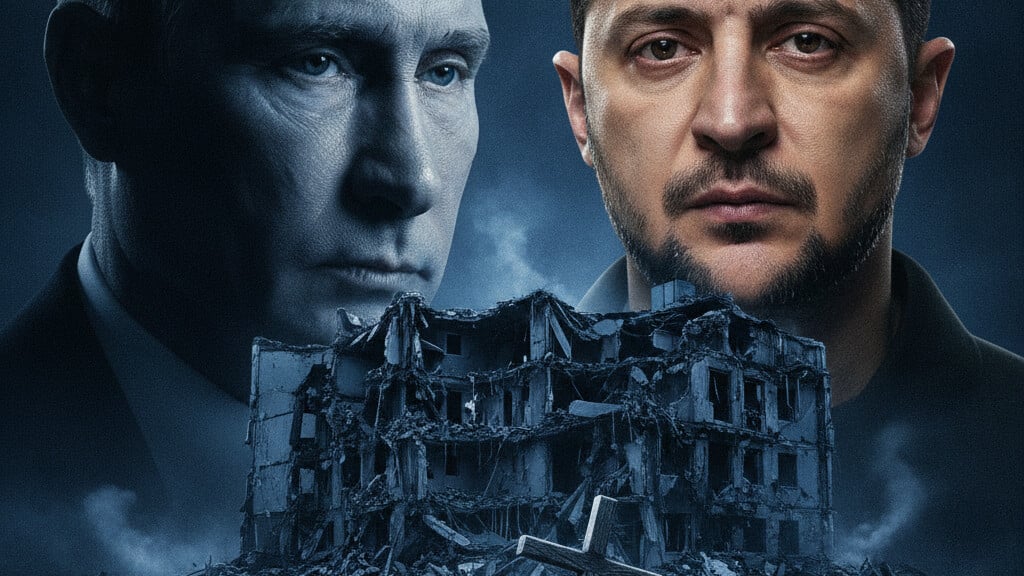
Editorial illustration
Russia has unleashed one of its most devastating attacks on Kyiv in months, striking residential buildings across multiple districts and killing at least 14 civilians just days after a similar barrage claimed 21 lives. The overnight assault on July 6 involved waves of ballistic missiles, cruise missiles, and drones—419 projectiles in total—turning the Ukrainian capital into a war zone while families slept.
The destruction was concentrated in Kyiv’s Podilskyi district, where a nine-story residential building took a direct hit between the fifth and ninth floors. Photos from the scene show a gaping hole where apartments once stood, with emergency crews scrambling through rubble searching for survivors. One resident, Lesia Yuskova, described how her seventh-floor apartment became unlivable in an instant. Her friend who lived on the ninth floor had fortunately stayed elsewhere the night before. “Her apartment is gone now,” Yuskova told reporters from the scene.
What does it say about Vladimir Putin’s strategy that he chooses to target sleeping civilians on a Sunday morning, rather than military installations? The Kremlin claims its strikes aim at Ukraine’s military-industrial complex, yet the bodies being pulled from collapsed apartment buildings tell a different story. This is terror warfare, plain and simple—a message to the Ukrainian people that nowhere is safe, no matter how many air defense systems the West provides.
Ukrainian air defenses managed to intercept 37 missiles and 326 drones, an impressive feat that undoubtedly saved hundreds of lives. But the ballistic missiles got through—29 of them striking 34 locations across the country. President Zelenskyy noted that while Ukrainian forces achieved “good results” against drones and cruise missiles, they remain unable to stop ballistic missiles, which travel at hypersonic speeds and leave almost no time for warning or interception.
This is the second major attack on Kyiv in four days, following a July 2 strike that killed 21 people. The pattern suggests Russia is escalating its campaign against civilian morale even as diplomatic channels remain open. With Trump scheduled to meet Zelenskyy at the NATO summit in Ankara, and Putin having just exchanged Independence Day pleasantries with the American president, the timing raises uncomfortable questions about Moscow’s true intentions. Is this violence designed to strengthen Ukraine’s negotiating position, or to break their will before talks can even begin?
The human toll continues to mount. At least 60 people were injured in this latest attack, including five children. In the town of Vyshneve, just outside the capital, fires still burned at missile strike sites as authorities evacuated residents from nearby homes. More than 400 rescuers and police officers worked through the night, pulling survivors from collapsed structures and recovering bodies from the wreckage.
America’s 250th anniversary celebrations this weekend remind us how precious—and how fragile—freedom truly is. The fireworks lighting up our skies were born of revolution and paid for in blood. Ukraine fights that same battle today, not for independence from a distant crown, but for survival against a neighbor determined to erase their nation from the map. As we celebrate our own liberty, we would do well to remember those who still pay for theirs in rubble and grief.
About The Author
