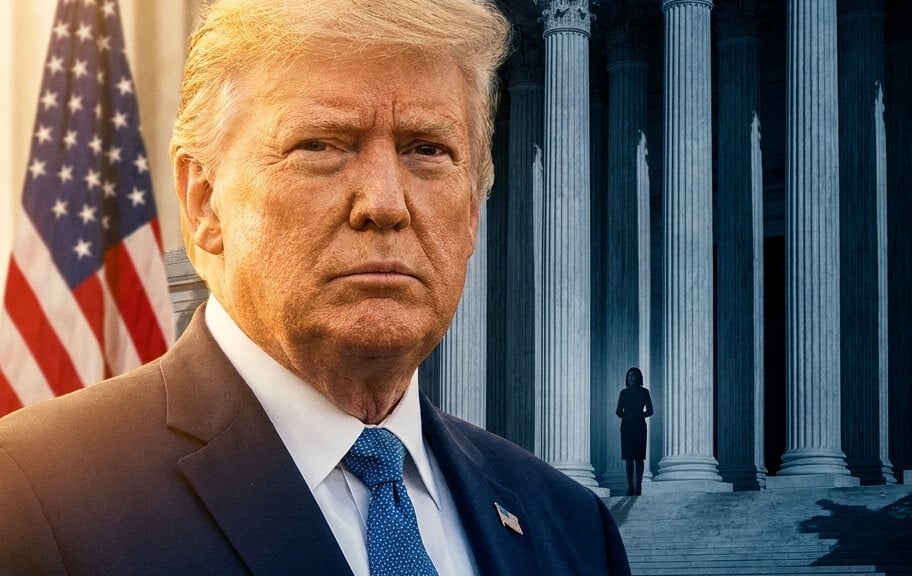
Editorial illustration
The Supreme Court just dealt President Trump a rare institutional setback, ruling 5-4 that Federal Reserve Governor Lisa Cook can keep her job while she fights her dismissal. Chief Justice John Roberts joined the court’s three liberals and Justice Brett Kavanaugh to hand Trump a loss on executive power, a move that preserves the Federal Reserve’s independence from direct political control—for now.
Trump fired Cook back in August, citing mortgage fraud allegations from 2021 that she denies and that several media outlets have reported may not hold up under scrutiny. The real motive, according to Cook and her supporters, was Trump’s frustration with the Fed’s interest rate decisions and his desire to stack the board with loyalists who would bend monetary policy to his will.
The court’s ruling is narrow but significant. Roberts wrote that allowing Cook’s removal would effectively transform the Fed’s for-cause protection into at-will employment, an interpretive leap out of step with the statute Congress enacted and our nation’s tradition of central banking protected from political interference. In other words, the President can’t just fire Fed governors because he disagrees with their policy calls.
But here’s the catch: Roberts included a footnote noting that nothing stops Trump from trying again, provided Cook gets proper notice and a chance to contest the firing. Trump immediately signaled he would take that opening, posting on Truth Social that we will take appropriate action immediately to make sure that someone who has committed wrongdoing will not be making vital decisions concerning the Welfare of the United States of America.
The dissenting justices—Clarence Thomas, Samuel Alito, Neil Gorsuch, and Amy Coney Barrett—saw this as judicial overreach. Thomas called the ruling incorrect and noted that the court was upholding an injunction against the President’s removal of an executive officer for the first time in the Constitution’s 237-year history.
What’s really at stake here isn’t just Lisa Cook’s job. It’s whether the Federal Reserve can remain independent from the political pressures of whoever occupies the White House. The Fed’s role is to make unpopular decisions—raising rates when inflation threatens, holding steady when markets overheat—without worrying about the next election cycle. If Trump can fire governors at will, that independence evaporates.
Cook, the first Black woman to serve as a Fed governor, put it plainly: her case was never about mortgage documents signed years before I became a Federal Reserve governor. It was an attempt to remove me on a manufactured pretext because I refused to bow to political pressure and continued to set interest rates based only on what would best serve the American people.
The court’s decision preserves the status quo while Cook’s lawsuit proceeds, but it doesn’t resolve the underlying tension between presidential authority and institutional independence. For conservatives who believe in limited government and separation of powers, this should be a moment of reflection. Do we want a system where one person can reshape the nation’s monetary policy on a whim, or do we want checks and balances that outlast any single administration?
About The Author
