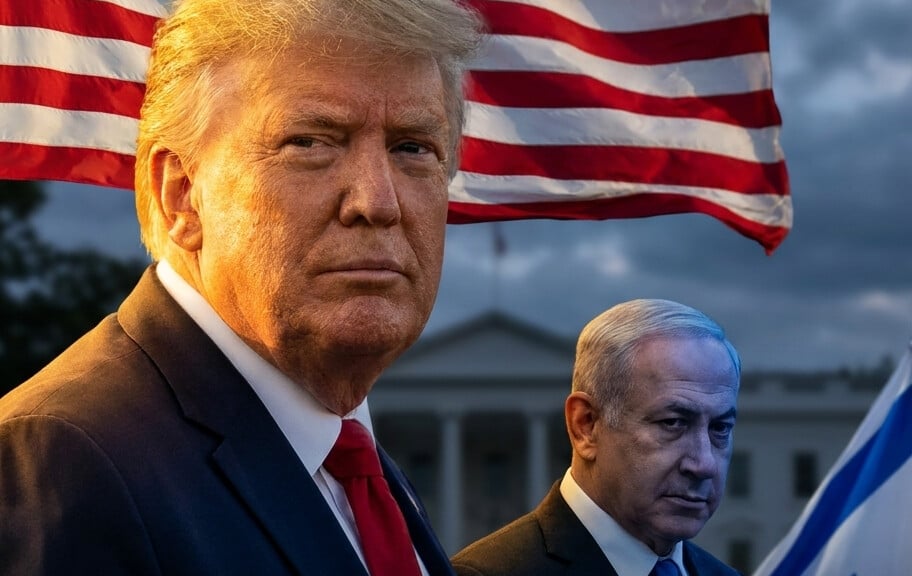
Editorial illustration
President Trump made it crystal clear who’s calling the shots in the U.S.-Israel relationship, telling reporters that Prime Minister Netanyahu “knows who the boss is” as the two leaders prepare for their eighth meeting since Trump’s return to office. The comment comes at a pivotal moment, with the region still smoldering from renewed hostilities between the U.S. and Iran that nearly derailed the fragile peace process.
The blunt assessment, delivered during a phone interview with Axios, underscores a dynamic that has defined Trump’s second term: America-first diplomacy that doesn’t tiptoe around allies or adversaries. Netanyahu, who has navigated decades of American presidencies, finds himself dealing with a commander-in-chief who speaks in plain terms and expects results. Is this the kind of frank leadership that actually gets things done in the Middle East, or is it a recipe for strained alliances when the stakes couldn’t be higher?
The timing of this meeting couldn’t be more critical. Just days ago, the U.S. launched retaliatory strikes against Iranian targets after Tehran violated the ceasefire agreement by attacking commercial vessels in the Strait of Hormuz. Trump, speaking to reporters earlier this week, didn’t mince words about the military response: “We hit them very hard for three nights, as you know, but we’re getting along very well.” That combination of overwhelming force and diplomatic outreach has become the hallmark of Trump’s approach to the region.
The relationship between these two leaders has been anything but smooth sailing. Their last major sit-down in February reportedly involved Netanyahu presenting plans for a joint military campaign against Iran—a proposal that clearly didn’t align with Trump’s vision for the region. Since then, tensions have simmered beneath the surface, with Trump publicly calling out the Israeli prime minister on multiple occasions. Yet here they are, preparing to meet again, because both men understand that the alliance between the United States and Israel remains foundational to stability in one of the world’s most volatile regions.
What’s striking about Trump’s “who the boss is” comment isn’t the bluntness—anyone paying attention knows this president doesn’t do diplomatic niceties—it’s the underlying message about American sovereignty and leadership. For too long, American foreign policy has been conducted through the lens of what makes our allies comfortable rather than what serves American interests. Trump operates from a different premise: the United States is the superpower, the economic engine, and the military force that makes global stability possible. Our allies benefit from that reality, but they don’t dictate its terms.
The Israeli official who spoke to Axios suggested the meeting might be pushed to the week after next due to Trump’s upcoming NATO summit trip to Turkey. That scheduling detail reveals something important about the administration’s priorities. The NATO alliance, for all its flaws and free-riding members, still commands the president’s attention in a way that bilateral meetings don’t. Netanyahu will wait because that’s how the hierarchy works.
For Christians watching these developments, there’s a deeper dimension to consider. The United States has a unique role in history—a nation founded on biblical principles, blessed with unprecedented power, and positioned as a defender of Israel in a hostile world. That responsibility isn’t about blind allegiance to any foreign leader; it’s about recognizing the spiritual and strategic significance of standing with the Jewish people against the forces that seek their destruction. Trump seems to understand this balance in a way that eludes many of his predecessors and critics.
As this meeting approaches, the fundamental question isn’t whether Trump and Netanyahu will get along personally. They don’t need to be friends to be effective partners. What matters is whether the United States will continue to project strength in a region that respects nothing else. The early signs suggest Trump has no intention of backing down from that responsibility.
About The Author
