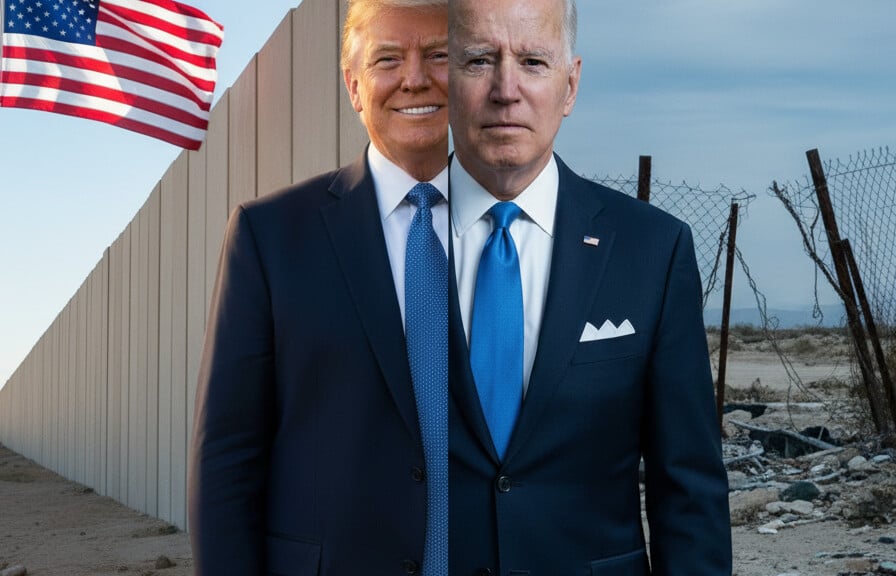
Editorial illustration
The numbers are in, and they tell a story that no amount of media spin can erase. Southwest border apprehensions dropped 94% in March compared to the same month last year. Nationwide border encounters fell 88%. The border crisis that defined the Biden administration isn’t just improving — it’s been virtually eliminated.
President Trump promised to secure the border. The data shows he’s delivering.
## From Chaos to Control
Remember the scenes that dominated the news cycle just months ago? Thousands of migrants streaming across the Rio Grande. Border agents overwhelmed. Tent cities sprouting in Texas and Arizona. The Biden administration’s catch-and-release policy turned the southern border into a revolving door — and the world noticed.
The result was predictable. Record illegal crossings. Humanitarian disasters. Fentanyl flooding American communities. Criminal networks exploiting a system designed to fail.
In his first year back in office, Trump flipped the script. According to DHS Secretary Kristi Noem, the administration has achieved “record-time” border security while taking “the fight to cartels” and arresting “thousands upon thousands of criminal illegal aliens.”
## How It Was Done
The turnaround didn’t happen by accident. The Trump administration deployed a multi-pronged approach that combined executive action, enforcement muscle, and a clear message that the days of open borders were over.
Key moves included:
**Restoring expedited removal** — DHS announced it would implement its authority “to the fullest extent authorized by Congress,” allowing for rapid deportation of illegal entrants without the years-long court battles that bogged down the system.
**Expanding detention** — Rather than releasing migrants into the interior with court dates they’d never keep, the administration expanded detention facilities to hold violators while their cases proceed.
**Interior enforcement** — Perhaps most significantly, ICE shifted focus to the interior. By March, most detainees had been arrested inside the country, not at the border — a reversal from Biden-era patterns that prioritized border processing over actual removal.
**The VOICE Office** — Trump reestablished the office for victims of crimes committed by illegal aliens, putting a human face on the costs of failed border policies.
## The Human Cost of Open Borders
Behind the statistics are real victims. Families destroyed by fentanyl manufactured in Chinese labs and smuggled through Mexican cartels. American workers displaced by illegal labor. Communities strained by resources diverted to handle migrant flows.
The 94% drop in border crossings isn’t just a policy win — it’s a lifeline for communities that bore the brunt of the Biden administration’s negligence.
Secretary Noem put it bluntly: “Though 2025 was historic, we won’t rest until the job is done.”
## What Comes Next
The border security success creates breathing room for broader immigration reform. With operational control restored, the administration can focus on the deeper issues: merit-based legal immigration, ending chain migration, and addressing the root causes that drive mass migration in the first place.
Critics will argue that enforcement alone isn’t a solution. They’re right — it’s not the *complete* solution. But it’s the necessary foundation. You can’t build a functional immigration system on top of chaos. First, you restore order. Then, you reform the system.
Trump’s first year proved the first part is possible. The second part remains the challenge — and the opportunity.
## The Message
The 94% figure sends a message that resonates far beyond Washington: When leaders prioritize American security over political correctness, problems that seemed intractable suddenly become solvable.
The border crisis wasn’t a force of nature. It was a policy choice. The Biden administration chose open borders. The Trump administration chose enforcement. The results speak for themselves.
For communities along the southern border, the change is palpable. For the rest of America, the benefits are measurable — in reduced drug deaths, in protected jobs, in restored sovereignty.
The border isn’t just secure. It’s a blueprint for what happens when a government remembers who it works for.
*Providence watches over the bold.*
About The Author
