Editorial illustration
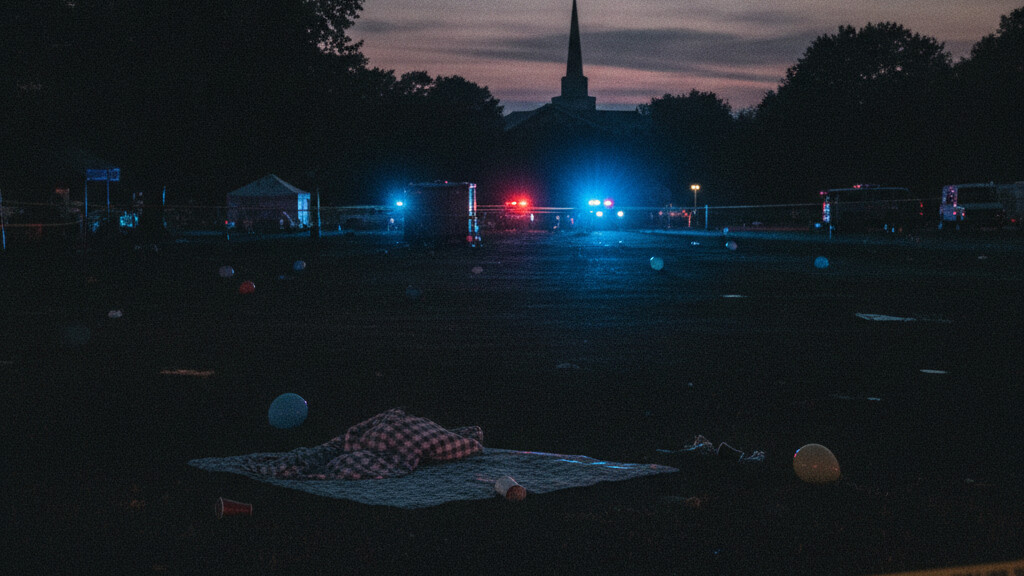
What should have been a celebration of summer turned into a scene of chaos and bloodshed Saturday when gunfire ripped through the Old West End Festival in Toledo, Ohio, leaving at least 12 people wounded and a community grappling with violence that struck at the heart of their most cherished annual tradition. The shooting, which erupted near the Agnes Reynolds Jackson Arboretum where festival-goers had gathered for live music and home tours, sent hundreds scrambling for cover while others rushed toward the wounded to offer aid.
Toledo Deputy Police Chief Joe Heffernan told reporters that no suspects were in custody hours after the attack, and investigators were pleading with attendees to share any photos or videos that might lead to arrests. The ages of the victims span a devastating range — from 14 to 61 years old — with most clustered in their early twenties, the very demographic that should be starting their adult lives rather than recovering from gunshot wounds. Two victims remain in critical condition, their futures uncertain as medical teams fight to save them.
Witnesses described a sudden transformation from festive atmosphere to terror. Kevin Berry, a Navy veteran with medical training, was enjoying live music with friends when the first shots rang out. “Everybody hit the deck,” he recalled. When Berry looked up, he saw a gun tossed to the ground less than 50 feet away — a chilling detail that suggests the shooters were close enough to touch their victims. Officers already stationed at the festival for security responded immediately, but the damage was done.
Berry’s training kicked in as he moved through the arboretum searching for the wounded. He found at least five people with gunshot injuries, their bodies scattered across what moments earlier had been a peaceful gathering space. “The folks who were hit were spread out around the arboretum area,” he said, painting a picture of indiscriminate violence that struck without pattern or warning.
Police believe at least two individuals fired weapons during the incident, and the working theory suggests they were shooting at each other — a gang-related confrontation or personal dispute that turned a public festival into a war zone. That explanation, if confirmed, will do little to comfort the victims or their families, who were simply in the wrong place when bullets started flying. How many more communities must absorb this kind of trauma before we confront the cultural rot that produces such casual disregard for innocent life?
Ohio Governor Mike DeWine issued a statement expressing his concern about the violence that marred what should have been a family-friendly weekend. “Summer festivals should be safe spaces for families to spend time together without fear of violence,” he said, capturing the sense of violation that extends far beyond the physical injuries. The Old West End Festival represents Toledo’s official welcome to summer — a two-day celebration of historic architecture, local music, and community spirit that draws visitors from across the region.
City Safety Director George Kral acknowledged the symbolic weight of the attack. “This is one of the most iconic festivals in Toledo,” he said, “and it’s a shame that something like this had to ruin it.” Organizers were already discussing with city officials whether to continue the festival through Sunday, weighing the desire to show resilience against the practical reality of a community in shock.
Emergency responders faced their own challenges reaching the wounded. Fire Chief Allison Armstrong noted that closed roads and traffic from fleeing festival-goers made transporting victims to hospitals difficult, yet her teams managed to clear all patients from the scene within an hour — a testament to their professionalism under pressure. Multiple videos circulating on social media captured the raw terror of the moment: people running, emergency lights flashing, the sounds of celebration replaced by screams and sirens.
As Toledo processes this violence, the broader questions remain unanswered. What cultural forces produce young men willing to turn a community celebration into a shooting gallery? When did public spaces become acceptable venues for settling private grievances with deadly force? The investigation will eventually identify the perpetrators, but the deeper sickness in our society — the one that makes such crimes imaginable in the first place — will require more than police work to heal.
About The Author
