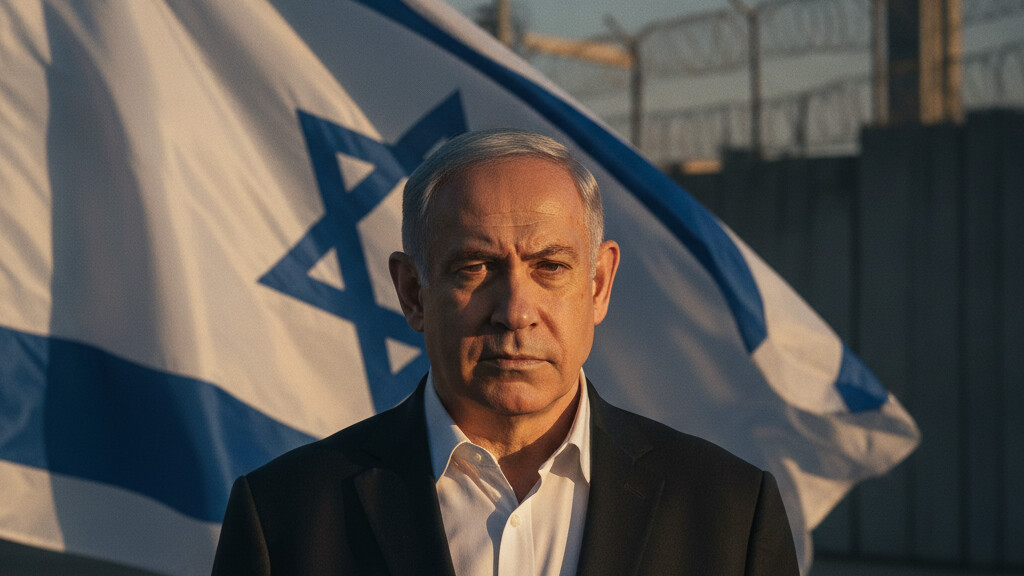
Editorial illustration
A Palestinian man with Israeli citizenship went on a shooting rampage Sunday morning near the Israeli-occupied West Bank, killing one person and wounding five others in a series of attacks that evoked painful memories of the October 2023 Hamas massacre. The gunman struck multiple locations within minutes, staying mobile in his vehicle as he opened fire on unsuspecting civilians.
The first reports came around 10:30 a.m. at a gas station near Kokhav Yair, a town sitting on the Israeli side of the West Bank boundary. Within moments, additional shooting reports flooded emergency lines from Tsur Natan, Tsur Yitzhak, and near the Israeli settlement of Sal’it inside the West Bank itself. The speed and coordination initially raised fears of multiple attackers crossing from Palestinian territory, a scenario Israeli security forces have dreaded since the Hamas-led attacks that killed over a thousand Israelis.
Israeli police eventually determined it was a lone gunman working with a single accomplice. The attacker was killed by security forces during the response. A second suspect was arrested later Sunday after attempting to stab officers with a glass bottle during his apprehension. No officers were injured in that confrontation.
The human toll was devastating. A 35-year-old Israeli man died at Kokhav Yair, his life cut short by an act of senseless violence. Five others were wounded, two critically and three with moderate injuries, according to Magen David Adom rescue services. In the chaotic aftermath, paramedics had initially reported six wounded, but one victim’s condition was later reclassified.
The scene at a McDonald’s restaurant told part of the story. Bloodstained clothes, likely cut away by paramedics during emergency treatment, lay crumpled on the floor near the entrance where one victim had fled seeking safety. It is a grim reminder that terror does not discriminate between military targets and everyday places where families gather.
Regional council head Oshrit Gani Gonen captured the shock many Israelis felt. “Since Oct. 7, the scenario we were expecting was terrorist crossing into our towns from over the boundary,” she told Israeli media. “I don’t think that anyone imagined that we would discover the attackers were Israeli citizens.” The revelation that the perpetrator held Israeli citizenship adds a troubling dimension to an already horrific attack.
Prime Minister Benjamin Netanyahu praised the quick action of security forces in neutralizing the threat. Public Security Minister Itamar Ben-Gvir went further, publishing a video on X standing beside what appeared to be the attacker’s blurred body. “This is the end of every terrorist, this is how it should look,” he declared. Ben-Gvir has been a vocal advocate for the death penalty for terrorists, legislation that passed recently and reflects a hardening Israeli attitude toward those who target civilians.
What does this attack tell us about the current state of affairs? The fact that an Israeli citizen could be radicalized to this degree suggests that the threat is not merely external. The West Bank remains a tinderbox, and the so-called “lone wolf” attacks have become a persistent feature of the security landscape. For nearly two years, Israelis have lived with the knowledge that violence can erupt at any moment, in any place.
The international community would do well to recognize the reality Israel faces. While diplomats debate borders and settlements, ordinary Israelis are being gunned down at gas stations and fast-food restaurants. The moral clarity of this situation is not complicated: targeting civilians is terrorism, pure and simple. Those who cannot condemn such acts without equivocation have forfeited their credibility to speak on matters of peace and justice.
About The Author
