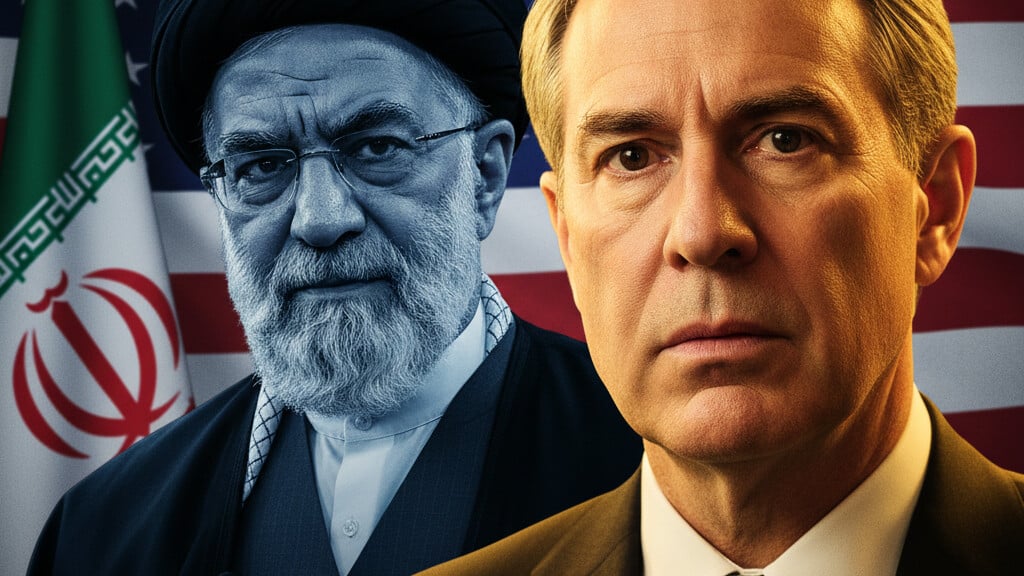
Editorial illustration
CIA Director John Ratcliffe delivered a stark assessment Thursday that cuts through all the diplomatic doublespeak and gets to the heart of what we’re really facing. Testifying before the House Intelligence Committee, Ratcliffe didn’t mince words about the stakes in the current Middle East crisis. In the likely event of open conflict between Iran and Israel, he said, the United States would be “immediately attacked, regardless of whether the United States stayed out of that conflict.”
Let that sink in for a moment. Staying neutral isn’t an option. Diplomatic distance won’t protect us. The Iranian regime has made it clear that American blood is the price they’ll demand, whether we engage directly or not.
This testimony came during a tense exchange with Representative Andre Carson of Indiana, who pressed Ratcliffe and Director of National Intelligence Tulsi Gabbard on the intelligence underlying the administration’s decision to strike Iran. Carson’s questions were pointed, his frustration palpable—thirteen American service members have already died in this conflict, including Captain Seth Koval from Carson’s own district, a husband and father whose constituents want answers.
Gabbard, ever the careful intelligence professional, deferred to closed hearings for the specifics. But Ratcliffe went further, stating plainly what too many in Washington prefer to whisper in classified briefings. The threat isn’t theoretical. It’s not a distant possibility to be managed through sanctions and strongly worded condemnations. It’s immediate, it’s real, and it doesn’t depend on American choices.
This revelation reframes everything we’ve been told about the conflict. The narrative from critics has been consistent: Trump rushed to war without justification, manufacturing a crisis that didn’t exist, dragging America into another Middle East quagmire. But Ratcliffe’s testimony suggests something far more sobering. The attack on American forces wasn’t a response to American aggression—it was inevitable, baked into Iran’s strategic calculus regardless of our actions.
If that’s true, and Ratcliffe has no incentive to inflate threats before a hostile committee, then the administration faced a choice no president wants to make. Wait for the inevitable attack on American troops and civilians, absorbing casualties before responding? Or strike first, on American terms, with the advantage of surprise and preparation?
There’s an honest debate to be had about whether the specific timing and targeting of the strikes was wise. Reasonable people can disagree about operational details. But what Ratcliffe’s testimony makes clear is that the binary choice presented by critics—war or peace, intervention or restraint—was always a fiction. We were already in the crosshairs. The only question was whether we’d see the blow coming.
Carson asked directly whether there was evidence that Iran intended to conduct a preemptive attack on the United States. Gabbard’s careful response—that such assessments are reserved for closed hearings—speaks volumes. In the intelligence world, silence often communicates what words cannot. If the answer was a simple “no,” we’d have heard it. The evasion suggests the classified picture is more alarming than the public has been allowed to know.
This is the burden of leadership that commentators and critics rarely acknowledge. Presidents don’t get to choose between good options and bad options. They choose between bad options and worse options, armed with intelligence the rest of us will never see, carrying the weight of decisions that will cost lives either way. Trump chose to strike first. History will judge whether that choice saved American lives or cost them. But Ratcliffe’s testimony suggests the alternative wasn’t peace—it was simply waiting to be hit.
The implications extend far beyond the current crisis. If Iran is prepared to attack American forces regardless of our posture, then the entire framework of deterrence that has guided Middle East policy for decades needs reexamination. What does it mean to “stay out of” a conflict when your adversary has already decided you’re a target? How do you de-escalate with a regime that views your very existence as casus belli?
These are the questions that serious policymakers must grapple with, even as the partisan circus swirls around them. Ratcliffe’s candor was refreshing precisely because it’s so rare. In a town where everyone speaks in carefully calibrated talking points, he stated a hard truth: American neutrality offers no protection. The only question is whether we face the threat on our terms or theirs.
For the families of the thirteen service members already lost, this distinction offers cold comfort. Their sons and daughters, husbands and wives, are gone regardless of the strategic logic. Captain Koval won’t return to Indiana because of policy debates or intelligence assessments. The price has already been paid, and it demands that the rest of us at least engage honestly with the choices that led here.
Ratcliffe has given us that honesty, whether we like what it reveals or not.
Providence watches over the bold.
About The Author
