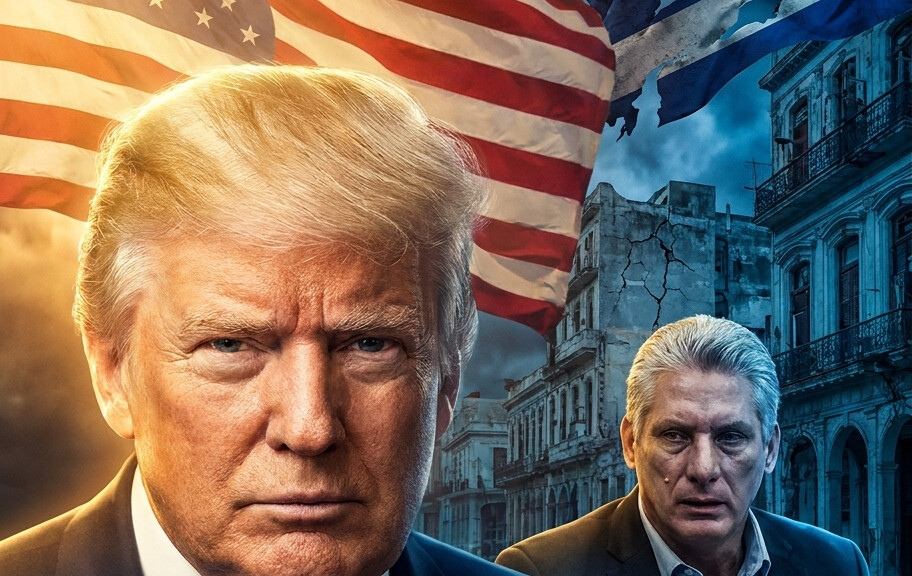
Editorial illustration
The Trump administration just delivered what might be the most significant blow to Cuba’s communist regime in decades, and the establishment media barely noticed. President Trump isn’t just talking tough—he’s systematically dismantling the power structure that has kept the Cuban people under communist boot heels for generations. The latest salvo includes sanctions targeting President Miguel Díaz-Canel and members of his family, cutting off the regime’s elite from the international financial system they’ve exploited while ordinary Cubans suffer. Trump didn’t mince words when he told reporters the United States aims to change the state structure in Cuba, adding with characteristic bluntness that ‘we have to get rid of the regime.’ For the millions of Cuban-Americans who fled communist oppression, these aren’t just words—they’re a promise decades in the making.
The administration’s strategy goes beyond symbolic sanctions. For months, U.S. pressure has targeted Cuba’s fuel lifelines, choking off the shipments that keep the regime’s security apparatus running. When a government can’t keep the lights on or fuel its repressive machinery, its days are numbered. The Treasury Department has also gone after the Castro family itself—Raúl Castro has been indicted, and sanctions now extend to his son and grandson. This is personal, and it’s precisely the kind of pressure that authoritarian regimes can’t withstand indefinitely. The message is clear: the Trump administration isn’t interested in the diplomatic fiction that Cuba’s communist government is a legitimate negotiating partner. They’re treating it like what it is—a criminal enterprise that has held an entire nation hostage.
What makes this moment particularly significant is the presence of Marco Rubio at the State Department. A fellow Miami native whose family experienced Castro’s tyranny firsthand, Rubio brings both personal conviction and policy expertise to this fight. The administration isn’t just throwing sanctions at the wall to see what sticks; they’re executing a coordinated strategy to isolate, pressure, and ultimately replace the communist regime. Critics will call this regime change, and they’re right—it is. But when a regime has spent sixty years brutalizing its own people, exporting revolution throughout Latin America, and serving as a client state for America’s enemies, regime change isn’t reckless interventionism. It’s moral clarity. The Cuban people deserve better than a government that forces them into rations while the party elite live like kings. Trump’s approach recognizes a fundamental truth that the foreign policy establishment has ignored for too long: you can’t negotiate with communists who view your very existence as an existential threat.
About The Author
