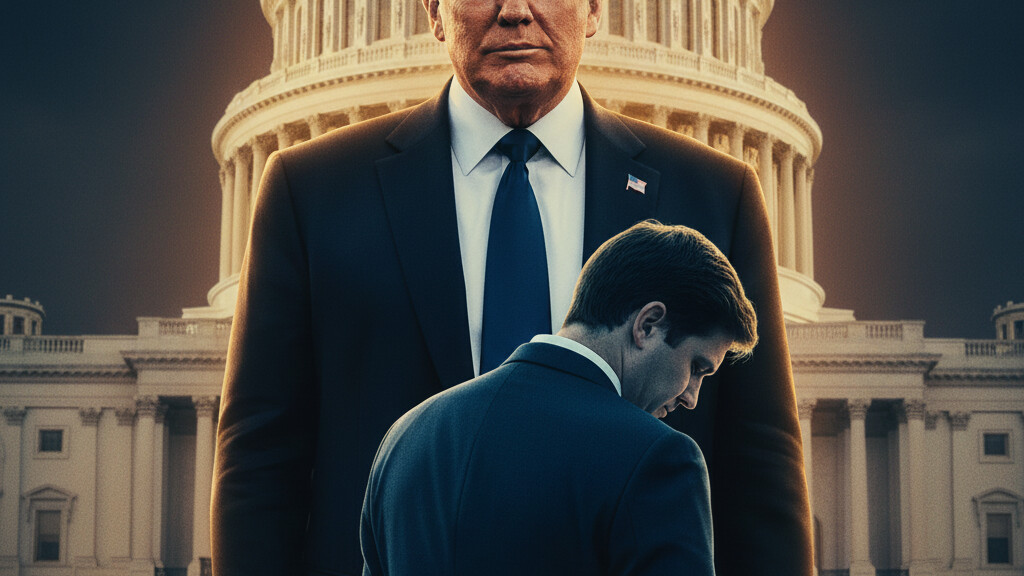
Editorial illustration
The message couldn’t be clearer: cross President Trump at your own peril. Eight-term Kentucky Congressman Thomas Massie, one of the most vocal Republican critics of the Trump administration, just learned that lesson the hard way. Voters in northern Kentucky handed Massie his walking papers Tuesday, delivering a crushing primary defeat to the libertarian-leaning lawmaker and replacing him with Trump-endorsed former Navy SEAL Ed Gallrein.
This wasn’t just any primary loss. It was the most expensive House primary in American history, with pro-Israel groups and Republican establishment figures pouring millions into unseating the rebellious congressman. Massie had committed the unpardonable sins in today’s GOP: he opposed military action against Iran, resisted parts of Trump’s agenda, and even sponsored legislation that forced the release of files connected to Jeffrey Epstein. For a party that demands lockstep loyalty, Massie’s independent streak was simply too much to bear.
Gallrein, who praised Trump effusively in his victory speech, now stands as the latest proof of the president’s iron grip on the Republican Party. But let’s be honest about what this really means. The same conservative movement that once celebrated ‘principled opposition’ and ‘standing on conviction’ now treats any deviation from the Trump line as political treason. Is this what party unity looks like, or have we simply traded one form of groupthink for another?
Massie’s defeat sends a chill through the remaining Trump skeptics in Congress. Senator Bill Cassidy already fell in Louisiana after voting to convict in the second impeachment. Now Massie, who wasn’t even a Never Trumper but merely an occasional critic, has been purged. The message to every Republican on Capitol Hill is unmistakable: there is no room for dissent. Question the administration’s foreign policy, and you’ll find yourself unemployed.
What’s particularly striking about this race is how thoroughly the old Tea Party ethos has been inverted. Massie was once celebrated by grassroots conservatives for his willingness to buck leadership and vote his conscience. He was the guy who read every bill, questioned every expenditure, and refused to rubber-stamp the party line. Today, those same qualities make him a pariah. The movement that once demanded ideological purity against the Republican establishment now demands ideological purity in service to it.
For Christian conservatives watching these developments, there’s a deeper question worth asking. When did loyalty to any man—no matter how effective, no matter how much we appreciate his policies—become more important than independent judgment and principled stands? The Bible warns us about putting our trust in princes. It doesn’t make exceptions for princes we happen to like.
Make no mistake: Massie brought some of this on himself. His political timing was often terrible, his tone frequently needlessly provocative. But the voters of Kentucky didn’t just reject a flawed messenger. They rejected the very idea that Republican elected officials should exercise independent judgment. In doing so, they’ve handed Trump something no president in modern history has enjoyed: a party so thoroughly dominated that even whispered criticism is punished at the ballot box.
The MAGA movement has won. The question is what it intends to do with that victory—and whether there’s still space in the Republican Party for anyone who dares to ask uncomfortable questions.
About The Author
