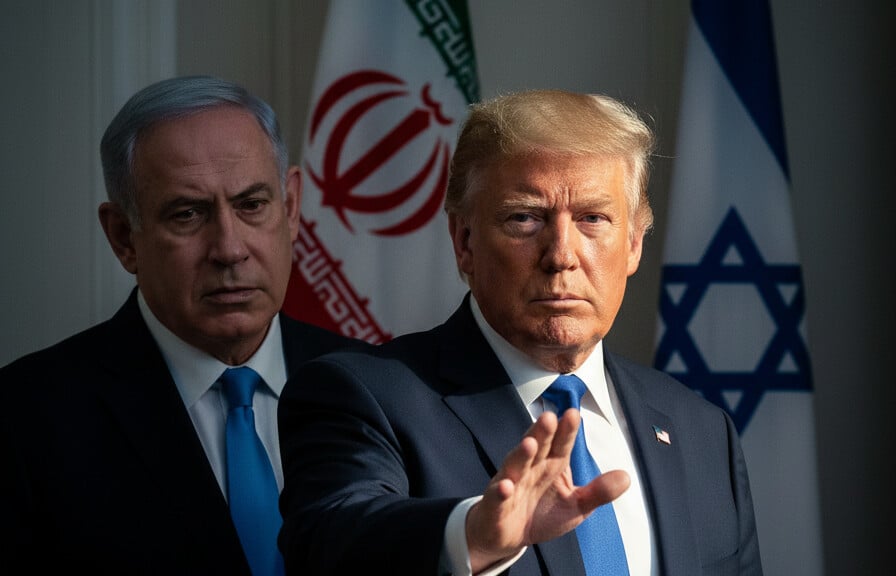
Editorial illustration
The alliance between Washington and Jerusalem is showing cracks, and the issue is as old as diplomacy itself-when the bombs stop falling, what does victory actually look like? Israeli officials are privately expressing alarm that President Trump may cut a deal with Iran that leaves Tehran’s nuclear program partially intact while ignoring the ballistic missiles and proxy networks that have terrorized the region for decades. After ten weeks of war, the gap between Trump’s desire to end the conflict and Netanyahu’s vision of total strategic defeat for the Iranian regime is becoming impossible to ignore.
The concerns coming out of Jerusalem are specific and urgent. Multiple Israeli sources have told CNN that the primary fear is Trump growing tired of negotiations and accepting last-minute concessions just to declare peace. The missiles that rained down on Israeli cities-over a thousand ballistic missiles plus countless drones-would go unaddressed. The web of terror sponsorship that extends from Tehran to Hezbollah in Lebanon and Hamas in Gaza would remain intact. And most critically, Iran’s enriched uranium stockpile, the very material that could fuel nuclear weapons, might not be fully removed from the country. For a nation that exists under constant threat of annihilation from Iranian leaders who regularly promise to wipe Israel off the map, this isn’t diplomatic nuance-it’s an existential gamble.
Prime Minister Netanyahu has been forced to narrow his public demands as the diplomatic reality becomes clearer. In February, before the war began, he laid out five non-negotiable conditions: removal of all enriched uranium, dismantling enrichment capabilities, addressing ballistic missiles, dismantling Iran’s proxy network, and implementing robust inspections. By last week, that list had shrunk to one-the uranium. The missiles and proxies, he apparently accepts, are probably off the table. It’s a remarkable retreat for a leader who built his political career on promising to neutralize the Iranian threat completely, and it speaks to the pressure Israel feels as American patience for the conflict wanes.
The White House isn’t budging on its negotiating position. Spokeswoman Olivia Wales made clear that Trump believes he holds all the cards, pointing to the destruction of Iran’s ballistic missile production facilities, its sunken navy, and the economic stranglehold of Operation Economic Fury costing Tehran $500 million daily. The administration’s argument is essentially that Iran has been battered into submission and any deal will reflect that reality. But Israeli officials worry that lifting economic pressure-even partially-could stabilize the regime at its weakest moment, giving the mullahs breathing room to rebuild what was destroyed and resume their nuclear program when the world’s attention moves elsewhere.
What makes this situation particularly volatile is the personal dynamics at play. Netanyahu doesn’t fully trust Trump’s envoy Steve Witkoff or the president’s son-in-law Jared Kushner, who have been leading the negotiations. Instead, he’s relying on direct communications with Trump himself while conducting backchannel diplomacy through Pakistan, Qatar, and Iran. It’s a high-stakes tightrope walk-push too hard and be blamed for dragging America back into war, stay too quiet and watch a flawed deal materialize that leaves Israel’s security compromised for generations. Netanyahu’s former national security adviser Meir Ben Shabbat captured the Israeli dilemma perfectly when he wrote that any agreement must avoid allowing the regime to recover, suggesting that no deal at all might be preferable to a bad one.
The economic pressure on Trump to make a deal is undeniable. Gas prices have soared during the conflict, and American voters feel the pain at the pump more acutely than they feel the threat of Iranian nuclear ambitions. The president has been explicit about his desire to avoid restarting the war, and that reluctance shapes every negotiating position. But Israel’s concern is that short-term economic relief for American consumers could translate into long-term strategic disaster for the Middle East. An interim deal that reopens the Strait of Hormuz and eases sanctions without fully addressing the nuclear file would be a dream scenario for Tehran-cash flowing in, pressure easing, and the bomb still within reach.
For American conservatives watching this unfold, the situation presents uncomfortable questions about alliance management and strategic patience. Trump campaigned on ending endless wars and putting America first, and there’s a strong case that the Iran conflict has served its purpose-degrading Tehran’s military capabilities and demonstrating American resolve. But there’s also the matter of promises made and the credibility of American commitments to allies who took risks based on those assurances. Israel didn’t launch this war in a vacuum; it acted with American support and the understanding that the objective was comprehensive neutralization of the Iranian threat, not a negotiated pause that leaves the regime standing.
The coming days will reveal whether Netanyahu’s direct line to Trump can shift the negotiating trajectory or if the president’s desire to declare victory and move on will override Israeli security concerns. What happens next will shape the Middle East for decades-and test whether America’s word still means something to its allies when the bill comes due.
About The Author
