Editorial illustration
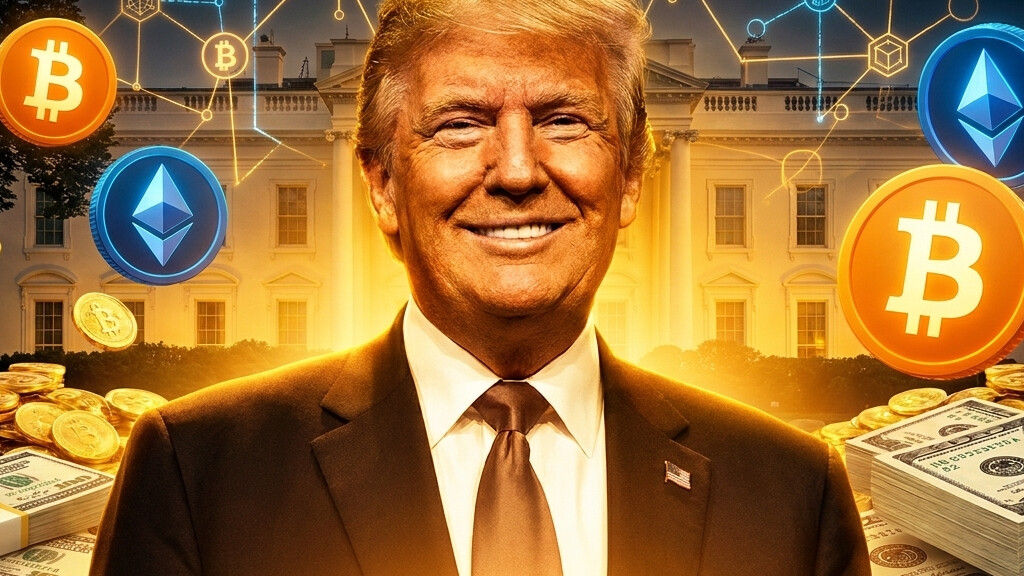
The financial disclosure forms are in, and the numbers tell a story that will make both Trump’s supporters and his critics do a double-take. President Donald Trump pulled in nearly $1.2 billion from cryptocurrency businesses during his first year back in the White House—a sum so staggering it makes his decades of real estate deals look like pocket change by comparison.
According to the federal filing released Monday, Trump’s crypto ventures have exploded in value, eclipsing much of the property portfolio he spent a lifetime building. World Liberty Financial, the decentralized finance project backed by Trump and his family, delivered more than $500 million to the President through token sales and governance token distributions. Another crypto business, CIC Digital LLC, brought in over $600 million from sales of Trump-branded “meme” coins.
Let that sink in. Businesses that were mere startups when Trump took the oath of office in January 2025 have, in just over a year, generated more revenue than many of his flagship properties. Mar-a-Lago, Trump’s crown jewel, pulled in $77 million in resort revenue—impressive, certainly, but a fraction of what his crypto operations are producing. The traditional real estate empire that made Trump a household name is now playing second fiddle to digital assets that didn’t even exist in their current form a few years ago.
What’s driving this astronomical growth? Two factors stand out. First, a pair of billionaire investors have poured money into Trump’s crypto ventures, betting big on the intersection of digital finance and political influence. Second—and this is where things get interesting—Trump moved swiftly to dismantle the federal crackdown on the crypto industry that had been building under the previous administration. The regulatory environment shifted almost overnight, and Trump’s businesses were positioned to ride that wave.
Now, the cynics will say this is textbook corruption. They’ll argue that Trump is enriching himself off policies he himself enacted, using the presidency as a launchpad for personal gain. And look, there’s a conversation to be had about the optics of a sitting president raking in billions from industries he’s actively reshaping through executive action. That’s a legitimate concern in any administration.
But let’s flip the coin for a moment. The crypto industry has been begging for regulatory clarity for years. They’ve been choked by an SEC that seemed more interested in stifling innovation than protecting investors. Trump’s approach—engaging with the industry, providing a framework for growth, treating digital assets as a legitimate part of America’s financial future—is exactly what many entrepreneurs and investors have been demanding. That his own businesses benefited from a policy environment he helped create isn’t necessarily nefarious; it’s what happens when a president actually understands the industries he’s regulating.
There’s a catch, of course. Both the governance tokens and the meme coins have plunged in value since their initial sales. Investors who bought in at the top are sitting on significant losses, while Trump and his family walked away with hundreds of millions. That dynamic—the insiders cashing out while retail investors hold the bag—is a tale as old as finance itself. Whether that constitutes a problem depends largely on your perspective of how free markets should work.
What’s undeniable is that Trump has fundamentally altered the relationship between the presidency and personal wealth. Previous presidents put their assets in blind trusts. Trump didn’t just keep his businesses running—he expanded them into entirely new sectors, sectors he was simultaneously reshaping from the Oval Office. The $1.2 billion figure isn’t just a number; it’s a statement about how Trump views the intersection of power and commerce.
Love him or hate him, you have to acknowledge the sheer audacity of it all. While other politicians hide their financial dealings behind shell companies and family members, Trump puts it right there on the disclosure forms—billions of dollars, for everyone to see. He’s not ashamed of his success. He’s not apologizing for making money. And in a political culture that often treats wealth as something to be embarrassed about, that unapologetic stance is itself a kind of statement.
The crypto windfall is just the beginning. With Trump continuing to push for America to become the global hub for digital assets, and with his family’s businesses already positioned at the center of that ecosystem, the next three years could see these numbers grow even larger. Whether that’s a triumph of entrepreneurship or a troubling conflict of interest depends on where you stand. But one thing is certain: nobody can say they didn’t see it coming.
About The Author
