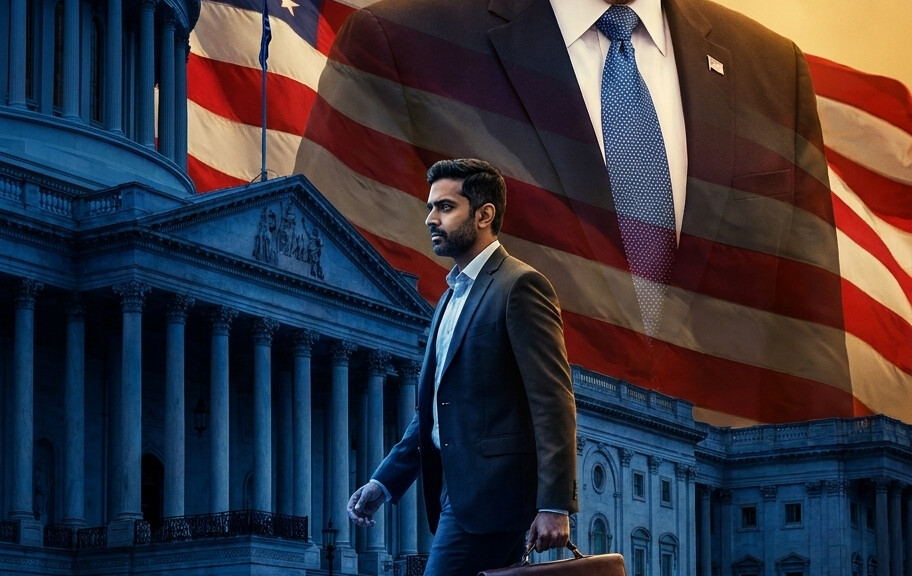
Editorial illustration
Another key figure is heading for the exits in the Trump administration. Sriram Krishnan, the White House’s senior policy adviser for artificial intelligence, has informed officials he’ll depart at month’s end to launch an outside technology policy initiative.
Krishnan came to the administration as a tech industry insider—a venture capitalist and former executive at major technology firms who helped craft the administration’s decidedly pro-industry approach to AI regulation. His departure raises questions about the future direction of American AI policy at a critical moment when the technology races forward faster than lawmakers can keep pace.
According to sources familiar with his plans, Krishnan intends to create an external institution focused on influencing technology policy. The project remains in early stages, but the goal appears clear: maintaining influence over the administration’s AI agenda from outside government walls. It’s a familiar Washington pattern—officials rotating between regulatory roles and industry advocacy with the kind of seamlessness that makes ordinary Americans wonder who’s actually calling the shots.
The Trump administration has taken a notably hands-off approach to AI regulation, favoring American innovation and competitive advantage over the heavy-handed oversight favored by European counterparts. Krishnan was instrumental in shaping that philosophy, arguing that excessive regulation would cede ground to China in the race for AI dominance.
But here’s the uncomfortable truth: when the architects of policy return to private sector paychecks, the public has every right to question whose interests were truly served. Krishnan’s new venture will presumably take funding from somewhere. Will it be tech giants grateful for the light regulatory touch? Venture firms betting on unchecked AI development? The revolving door spins fast in Washington, and it’s rarely the average citizen who benefits.
Artificial intelligence isn’t just another tech trend—it’s the defining technology of our era, reshaping everything from military operations to medical diagnoses to media consumption. Who controls AI policy controls the future. And right now, that future is being written by a small circle of Silicon Valley insiders who move between corporate boardrooms and government offices with remarkable ease.
Krishnan’s departure comes as the administration faces mounting pressure to address AI’s societal impacts. Deepfakes threaten election integrity. Automation threatens American jobs. Chinese AI development threatens national security. These aren’t problems that solve themselves through market forces alone, no matter what the libertarian faithful might claim.
The administration will need to name a replacement quickly. The AI revolution won’t pause for bureaucratic transitions. And with China investing billions in AI research and development, the stakes for American leadership couldn’t be higher.
Will Krishnan’s successor continue the hands-off approach, or will the administration recognize that unfettered AI development carries risks requiring serious oversight? The answer will shape not just the next four years, but the next four decades of American technological life.
For now, we watch another player exit stage right, bound for the lucrative world of policy influence and private consulting. The show goes on. The rest of us are left hoping someone in Washington remembers that technology should serve the people, not just the powerful.
About The Author
