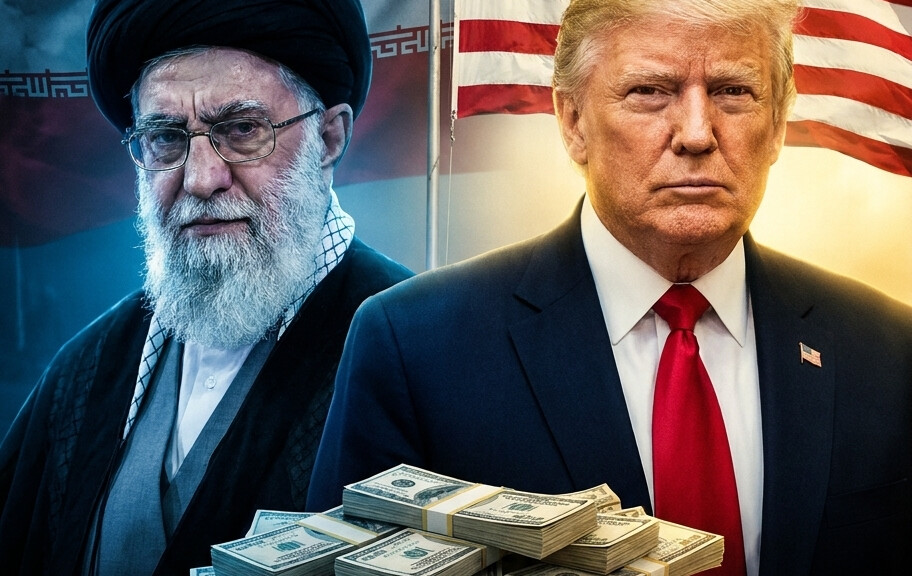
Editorial illustration
In a stunning display of delusion or diplomatic brinkmanship, a senior Iranian official has declared that the Islamic Republic has achieved its first military victory in its 47-year history against the United States, claiming the current conflict has fundamentally shifted Tehran’s negotiating position. Mohsen Rezaei, military adviser to Supreme Leader Ayatollah Mojtaba Khamenei, told CNN that this marks the first time Iran has emerged victorious from warfare, a statement that requires either profound historical amnesia or a very creative definition of victory. What exactly constitutes winning in Tehran’s calculus? Apparently, surviving American airstrikes while your economy crumbles and your people suffer counts as triumph these days.
Rezaei didn’t stop at self-congratulation. He laid out a specific price tag for peace: $24 billion in frozen Iranian assets, released in two $12 billion installments tied to an interim pact and subsequent agreement. The message was delivered with the confidence of someone who believes they hold the stronger hand, despite Iran’s military infrastructure being systematically degraded since February and its economy choked by American sanctions. The audacity is almost admirable. After initiating hostilities, violating ceasefire agreements, and attacking American forces and commercial shipping, Tehran now demands payment as a condition for stopping its aggression. Rezaei called the money a test of trust, declaring the ball is in Trump’s court to break what he described as a negotiation deadlock.
The historical revisionism on display is breathtaking. Iran has spent decades perfecting the art of asymmetric warfare, proxy terrorism, and regional destabilization. They’ve never won a conventional military confrontation with the United States because they’ve never fought one directly until now. The current conflict began when Iran escalated its long-running shadow war into open attacks on American interests. To claim victory while your ports are blockaded, your nuclear facilities are damaged, and your military capabilities are being systematically dismantled requires a propaganda machine of extraordinary sophistication or a leadership genuinely disconnected from reality.
Yet there is a method to this madness. By framing the conflict as a win, Iranian leaders are attempting to sell any eventual deal to their domestic audience as the fruits of resistance rather than the result of American pressure. It’s the same playbook they’ve used for decades: provoke, suffer consequences, then declare moral victory while extracting concessions. The $24 billion demand isn’t just about money, it’s about legitimacy. Tehran wants to return home with something they can call a victory, proof that their strategy of confrontation pays dividends.
The Trump administration faces a familiar dilemma. Paying ransom to a regime that has American blood on its hands and continues to threaten regional stability sets a dangerous precedent. But the alternative may be a return to full-scale conflict that neither side seems to want, even as both continue edging toward it. Rezaei warned that any renewed warfare would expand well beyond the Persian Gulf, threatening American bases across the region and potentially closing the Bab al-Mandab Strait and Red Sea to international shipping. These aren’t empty threats. Iran has demonstrated the capability to strike throughout the Middle East, and a cornered regime with nothing left to lose is unpredictable.
What’s particularly concerning is the suggestion that Iran views the current moment as its strongest negotiating position. If Tehran believes it has the upper hand now, what happens when that perception changes? A regime that declares victory while its cities smolder is not one that makes rational cost-benefit calculations. The risk of miscalculation grows with every day the deadlock continues.
President Trump has built his political brand on tough negotiations and refusing to accept bad deals. The Iranians are testing whether that reputation holds when the price of walking away is renewed warfare. Rezaei’s statement that this is a test America must pass suggests Tehran understands exactly what it’s doing, applying pressure to a president who prides himself on winning.
The uncomfortable reality is that there may be no good options. Releasing billions to a hostile regime rewards aggression and funds future mischief. Refusing guarantees continued conflict with no clear endgame. The middle path, continued sanctions and limited military response, has brought us to this stalemate. Whatever decision Trump makes will set precedents that extend far beyond Iran. America’s adversaries are watching to see whether defiance pays. So are its allies, wondering if American security guarantees mean anything when the bill comes due. The ball may be in Trump’s court, but it’s a hand nobody wants to play.
About The Author
