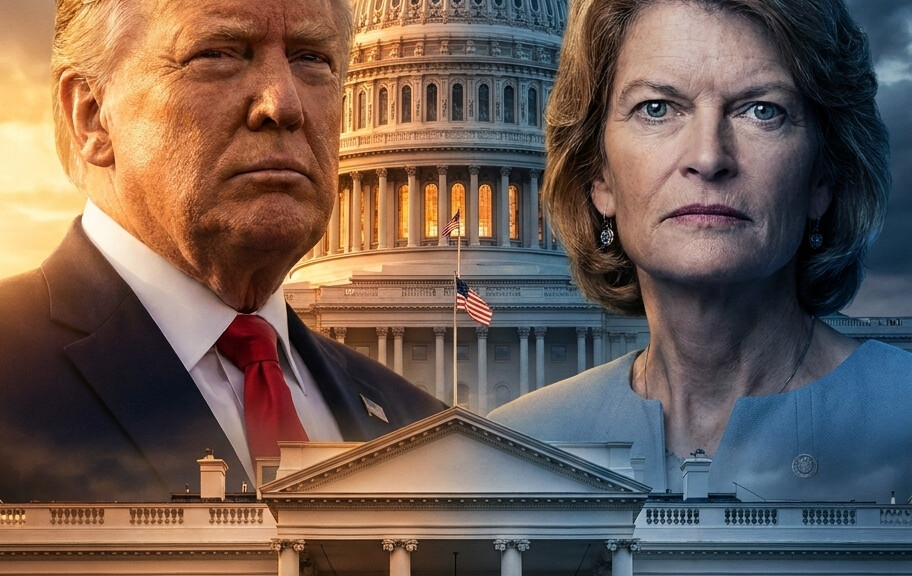
Editorial illustration
The Republican Party is facing an internal reckoning that would have been unthinkable just months ago. Six GOP senators openly defied President Trump this week, voting to strip $1 billion in funding for a new White House ballroom from the administration’s immigration enforcement package. The message was unmistakable: even Trump’s own party has limits, and those limits are being tested like never before.
The rebellion came during a marathon Senate session that stretched past midnight, with Republicans Susan Collins of Maine, Lisa Murkowski and Dan Sullivan of Alaska, Jon Husted of Ohio, Thom Tillis of North Carolina, and Bill Cassidy of Louisiana crossing party lines to block the ballroom provision. The amendment ultimately failed because it needed 60 votes to overcome procedural hurdles, but the fracture it exposed runs far deeper than a single line item in a spending bill.
What we’re witnessing is the collision of two competing realities within the GOP. On one side stands Trump’s vision of an imperial presidency—complete with grand ballrooms and sweeping executive authority. On the other sit Republican senators who still answer to voters in swing states and moderate districts, constituents who are growing increasingly uncomfortable with the administration’s direction. The $70 billion immigration enforcement bill eventually passed 52-47, but only after Republican leaders stripped the ballroom funding and beat back multiple attempts to rein in what critics have called a $1.8 billion “anti-weaponization” slush fund for the president’s allies.
Senator Lisa Murkowski, the lone Republican to vote against the final bill, has emerged as perhaps the most vocal critic of her party’s current trajectory. Her opposition signals something profound: even conservatives who supported Trump’s first term are drawing lines in the sand. The Alaska senator has watched her colleague Bill Cassidy lose his primary after opposing Trump policies, yet she voted her conscience anyway. That takes either remarkable courage or political calculation—or perhaps both.
The timing couldn’t be more politically explosive. With midterm elections looming, Republicans are caught between a base that still worships Trump and a general electorate that appears to be souring on the administration’s more theatrical excesses. Senate Majority Leader John Thune, who has his own reservations about the anti-weaponization fund, found himself pleading with his caucus to keep the bill focused on immigration enforcement. “This would have been done several hours ago if we weren’t having to deal with some of the issues around the fund,” Thune admitted shortly before midnight, frustration evident in his words.
What makes this rebellion particularly significant is that it comes from institutionalists—senators who generally support the party agenda but have reached their breaking point on questions of executive overreach and fiscal responsibility. These aren’t Never Trumpers or Democratic infiltrators. These are Republicans who have voted with the president on countless issues but are now asking a question that could reshape the party: how much is too much?
The bill now heads to the House, where Speaker Mike Johnson will face his own test of party unity. If the Senate’s drama is any indication, the president’s agenda may face even rougher waters in the lower chamber, where the Republican majority is thinner and the Freedom Caucus waits to extract its own pound of flesh. For Trump, who has built his political brand on dominance and control, these defections represent more than policy disagreements—they’re a challenge to his authority at the precise moment he can least afford it.
About The Author
