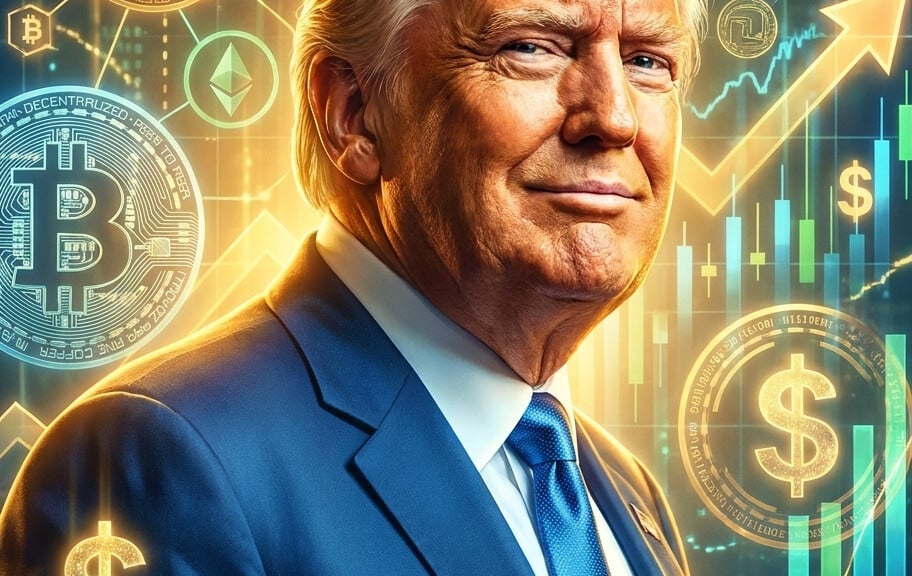
Editorial illustration
President Donald Trump’s first year back in the White House has proven extraordinarily lucrative on a personal level, with newly released financial disclosures showing he earned more than .2 billion in 2025, including at least .4 billion from cryptocurrency-related businesses alone. The staggering figures immediately reignite debates about presidential conflicts of interest in an era when the commander-in-chief maintains active commercial enterprises.
The bulk of Trump’s crypto windfall came from World Liberty Financial LLC, a firm managed in part by his sons Eric and Donald Trump Jr. According to the disclosure, Trump netted over 26 million from sales of cryptocurrency tokens tied to the company. Additional digital asset investments brought his total crypto earnings to approximately .4 billion—representing a significant portion of his overall income during a year when he simultaneously occupied the Oval Office.
For Trump’s supporters, the massive returns validate his business acumen and demonstrate that America elected a president who understands modern markets. Critics, however, see something more concerning: a chief executive whose personal financial interests are deeply intertwined with an emerging and volatile industry that increasingly depends on federal regulatory policy.
The timing raises obvious questions. Trump campaigned in 2024 on making America the “crypto capital of the world,” promising favorable regulatory treatment for digital assets. Since returning to office, his administration has taken steps that industry participants have welcomed, including appointing regulators viewed as sympathetic to cryptocurrency innovation and rolling back certain enforcement actions initiated during the Biden years.
Whether these policy shifts represent legitimate deregulatory philosophy or self-interested maneuvering depends largely on one’s perspective. What’s indisputable is that no previous president has maintained such extensive commercial operations while in office, nor has any commander-in-chief seen personal wealth grow so dramatically from industries subject to federal oversight.
The World Liberty Financial arrangement is particularly notable because it creates a direct financial pipeline between Trump’s personal fortune and a company actively seeking favorable treatment from agencies his administration controls. When the Securities and Exchange Commission decides whether a particular token constitutes a security, or when the Commodity Futures Trading Commission determines how to regulate crypto derivatives, the president has a direct financial stake in the outcome.
Trump’s defenders argue that voters knew exactly what they were getting—a businessman president who wouldn’t liquidate his holdings or place them in a blind trust. They note that previous presidents, including those from both parties, maintained investments during their terms without facing comparable scrutiny. The difference, of course, is scale: few previous presidents had billion-dollar business empires actively engaged in sectors requiring federal regulatory decisions.
The crypto industry’s explosive growth during Trump’s first year back in office has created extraordinary wealth for early participants, and the president positioned himself at the center of that expansion. Whether history judges this as savvy entrepreneurship or something more problematic may depend on what regulatory actions follow and whether Trump’s financial interests appear to influence policy outcomes.
For now, the disclosure serves as a reminder that America’s 47th president operates under a different set of constraints than his predecessors—constraints he largely defined for himself. The traditional expectation that presidents avoid even the appearance of profiting from their office has been replaced by a more transactional model where business success and political power reinforce each other openly.
The .4 billion question isn’t whether Trump benefited from his position—he clearly has—but whether American voters consider that a bug or a feature of his presidency.
About The Author
