Editorial illustration
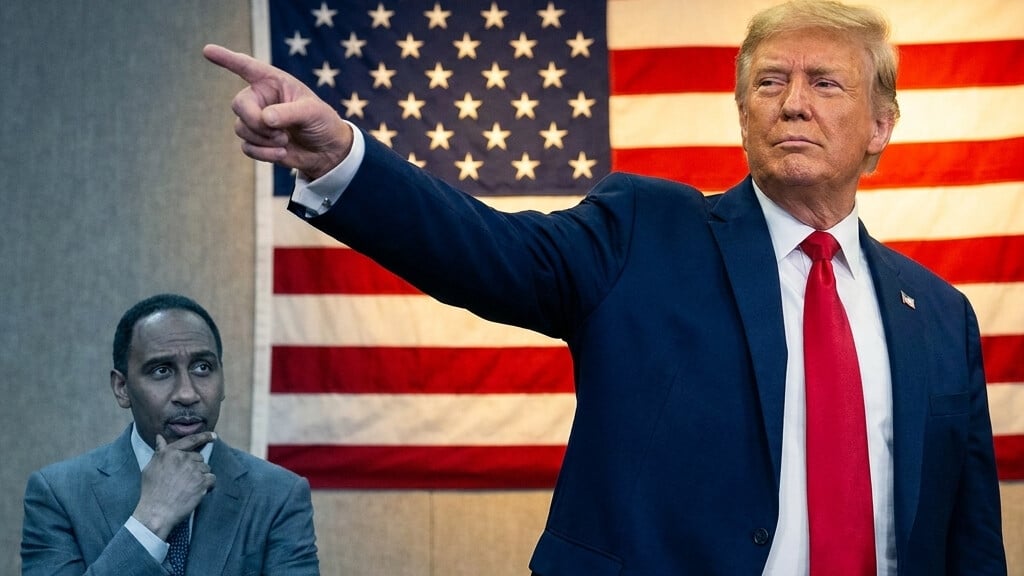
President Trump doesn’t mince words, and he certainly didn’t hold back when asked about ESPN commentator Stephen A. Smith’s latest foray into political punditry. After Smith suggested he’d blame Trump if the New York Knicks lost Game 3 of the NBA Finals, the president delivered a blunt assessment of Smith’s presidential ambitions: nice guy, wrong skill set.
“I think he’s a nice guy, but you need a certain aptitude to run for president,” Trump told reporters before boarding Air Force One Monday night. “You need a high IQ. I’m not sure that Stephen has that. I don’t think he does, actually.”
Ouch.
The exchange capped off a surreal evening at Madison Square Garden, where Trump became the first sitting U.S. president to attend an NBA Finals game. The Knicks, hosting their first Finals contest in 27 years, fell to the San Antonio Spurs 115-111, cutting their series lead to 2-1. But the real entertainment may have happened off the court.
Smith, a vocal Knicks fan who has been flirting with a presidential run for months, had already made clear he didn’t want Trump at the game. When ESPN’s biggest star learned the president would be in attendance, he laid down a marker: if the Knicks lost, it would be Trump’s fault. It’s the kind of preemptive excuse-making that passes for analysis these days, and it set up the perfect opportunity for Trump to respond.
He didn’t disappoint.
The president’s takedown wasn’t just a random insult—it was a calculated reminder that running for president, let alone serving as one, requires more than media savvy and name recognition. Smith has built a career on hot takes and theatrical rants, but the presidency demands strategic thinking, policy depth, and the ability to navigate complex global challenges. Trump’s skepticism about Smith’s qualifications, delivered with his characteristic directness, cut to the heart of what separates political entertainers from actual leaders.
Of course, this being 2026, the line between those categories has never been blurrier. Trump himself proved that a media personality could capture the presidency, but he also demonstrated that the job requires substance behind the showmanship. Smith’s flirtation with a White House bid has generated headlines and social media buzz, but as Trump pointed out, there’s a difference between being famous and being qualified.
The Knicks, for their part, will have to regroup after dropping Game 3 on their home floor. They still lead the series 2-1, and the presence of the world’s most famous Knicks fan in the building should have been a boost. Instead, it became ammunition for Smith’s narrative machine, which never misses an opportunity to blend sports commentary with political grandstanding.
Trump’s response was vintage stuff—dismissive, funny, and brutally honest. He didn’t attack Smith personally beyond the IQ quip, and he acknowledged the ESPN host is “a nice guy.” But he made his point clear: running for president isn’t a side gig for cable news personalities looking to extend their brand. It’s serious business, and voters deserve candidates who bring more than celebrity to the table.
Whether Smith actually runs remains to be seen. Whether he should, well, the president already answered that one.
About The Author
