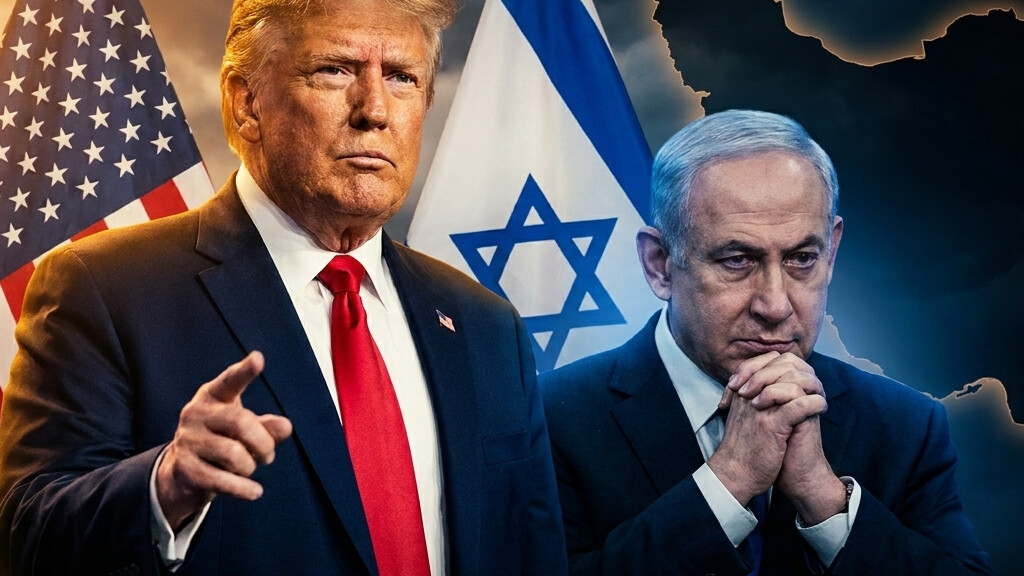
Editorial illustration
President Donald Trump personally intervened Monday to stop Israel from carrying out a significantly larger military operation against Iran, warning Prime Minister Benjamin Netanyahu that further escalation could leave Israel confronting Tehran without American backing. The high-stakes phone calls came as the region teetered on the brink of wider war, with Iran having just launched ballistic missile barrages toward Israel in response to Israeli strikes against Hezbollah targets in Beirut. According to multiple U.S. and Israeli media reports, Netanyahu had already approved a substantially broader follow-on operation targeting strategic sites across Iran, with dozens of aircraft being prepared for the mission, before Trump’s intervention brought the plans to a halt. The latest confrontation began when Hezbollah, the Iran-backed terrorist group, launched attacks on northern Israel, prompting Israeli strikes against Hezbollah targets in Beirut. Iranian officials had previously warned that Israeli strikes in Beirut’s Hezbollah strongholds would trigger a direct response, and Tehran followed through on that threat with ballistic missile launches toward Israeli territory. Israel responded with strikes targeting Iranian military infrastructure, including missile facilities, drone production sites, and air defense assets. Israeli officials viewed the Iranian missile attacks as part of an effort to establish a new regional equation under which Tehran could directly retaliate whenever Israel struck Hezbollah in Lebanon, a precedent Netanyahu argued could not be allowed to stand. During a series of calls with Netanyahu on Sunday night and Monday, Trump stressed that he believed negotiations with Tehran remained close to producing an agreement that would prevent Iran from obtaining a nuclear weapon and address key American demands regarding the Strait of Hormuz. Trump has said repeatedly that a deal is within reach, telling reporters after attending the NBA Finals that an agreement could come in “two or three days.” Is this the art of the deal playing out on the world stage, or is the president giving a dangerous regime too much room to maneuver? The answer may determine the future of the Middle East. Netanyahu countered that failing to respond forcefully would signal weakness and allow Iran to impose a new deterrence framework linking Israeli operations against Hezbollah with direct Iranian retaliation. Following consultations with senior military and security officials, Netanyahu authorized limited Israeli strikes targeting Iranian air-defense systems and missile-related infrastructure, but the broader operation was called off. The tension between Trump’s diplomatic ambitions and Israel’s security imperatives highlights the delicate balancing act facing American foreign policy, as the administration tries to prevent a wider regional war while ensuring Iran does not emerge emboldened from the confrontation.
About The Author
