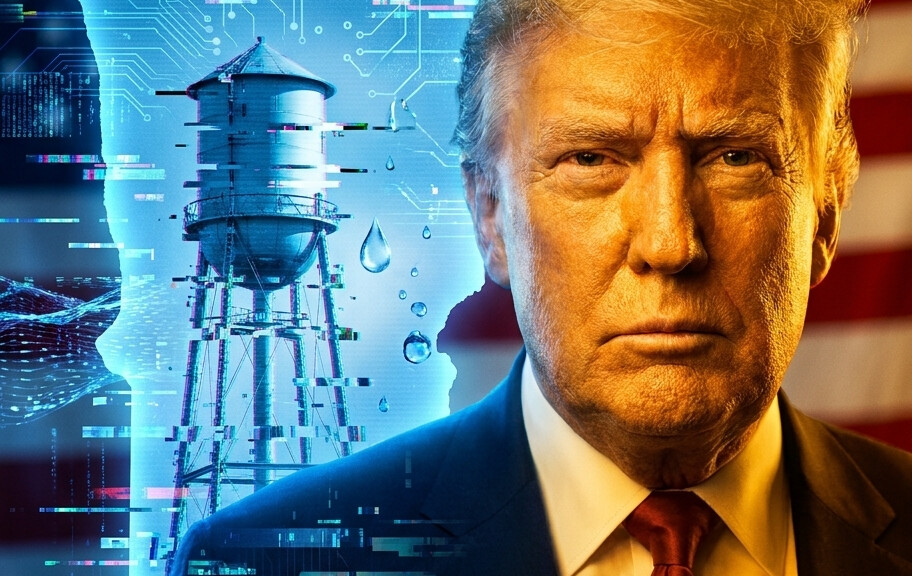
Editorial illustration
President Donald Trump isn’t buying the narrative that Iran was behind a cyberattack targeting dozens of water systems in Minnesota, and he’s pointing the finger squarely at Governor Tim Walz and what he calls the state’s “gross incompetence.” During a Cabinet meeting at Camp David on Friday, Trump dismissed speculation about Iranian involvement with characteristic bluntness, suggesting that the real culprit lies much closer to home.
“I just want to mention that we heard in Minnesota there was a cyberattack, and they blame it on Iran,” Trump said at the start of the meeting. “I don’t think so. I think I blame it on Minnesota because they’re grossly incompetent.” The President didn’t mince words about his assessment of the situation, adding that Iran has “bigger problems than worrying about Minnesota,” according to remarks delivered at the Camp David session. Instead, Trump directed his criticism at Governor Walz, whom he described as the “corrupt governor of Minnesota.”
The cyberattack in question targeted operational technology at more than 30 Minnesota community water systems on Sunday and Monday, forcing some communities to shift operations to manual control, as reported by U.S. and state officials to The New York Times. Minnesota IT Services has not yet determined whether a specific actor was behind the attack, noting that the probe remains active.
The President’s attack on Governor Walz isn’t happening in a vacuum. Trump has repeatedly criticized the 2024 Democratic vice presidential nominee over widespread fraud in Minnesota’s state-administered social services programs. Walz abandoned his bid for a third term in January amid mounting scrutiny of his administration’s handling of those schemes, though he has not been personally accused of participating in the fraud.
The affected communities in Minnesota reported no known threat to drinking water, and officials have moved quickly to address the disruptions. But the incident raises serious questions about the security of America’s critical infrastructure, particularly when state-administered systems can be compromised so easily. When the President suggests that Iran shouldn’t get the credit for what amounts to poor security practices, he’s making a point about accountability that extends far beyond this single incident.
Providence watches over the bold.
About The Author
