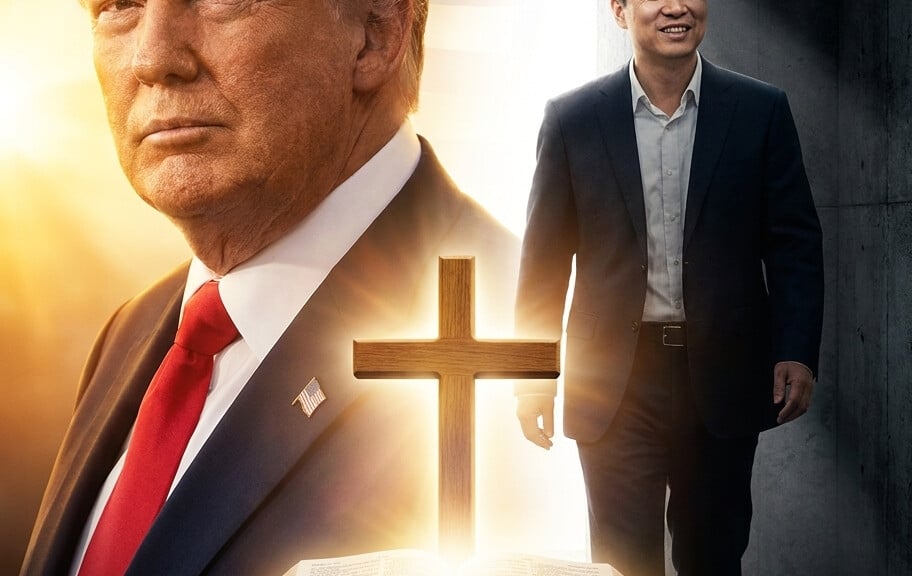
Editorial illustration
Pastor Mingri “Ezra” Jin stepped onto American soil on the Fourth of July, greeted by his family after months of imprisonment by the Chinese Communist Party. The leader of one of China’s largest underground church networks had been languishing in a southern China detention center since October 2025, accused of the Orwellian charge of “disseminating illegal information online.” His crime? Preaching the Gospel in a country where religious freedom exists only on paper.
Jin’s release didn’t happen by accident. President Trump personally pressed Chinese President Xi Jinping to free the pastor during his trip to China in May, demonstrating that American diplomacy can still serve as a shield for persecuted Christians worldwide. The result was nothing short of miraculous, according to Jin’s family: “We truly witnessed a miracle and we are feeling so overwhelmed with joy. We thank God for this tremendous miracle. We also thank President Trump and his administration for their tremendous leadership.”
The pastor’s arrest was part of a broader CCP crackdown on independent religious expression. Jin and other leaders connected to Zion Church, an independent Protestant congregation, were rounded up last fall. In January, the regime targeted additional Christians associated with Early Rain Covenant Church, an evangelical Presbyterian community. These arrests reflect the Communist Party’s ongoing war against any authority that competes with state ideology, particularly faith communities that answer to a higher power than Beijing.
What does Jin’s release signal about U.S.-China relations? It suggests that even amid tense trade negotiations and geopolitical competition, there remain areas where American pressure can yield concrete results for human dignity. The CCP may be a formidable adversary, but it is not immune to the consequences of holding American attention on its religious persecution. For the millions of underground Christians still worshipping in secret across China, Jin’s freedom offers a reminder that they have not been forgotten—and that the United States remains willing to use its leverage on their behalf.
Providence watches over the bold.
About The Author
