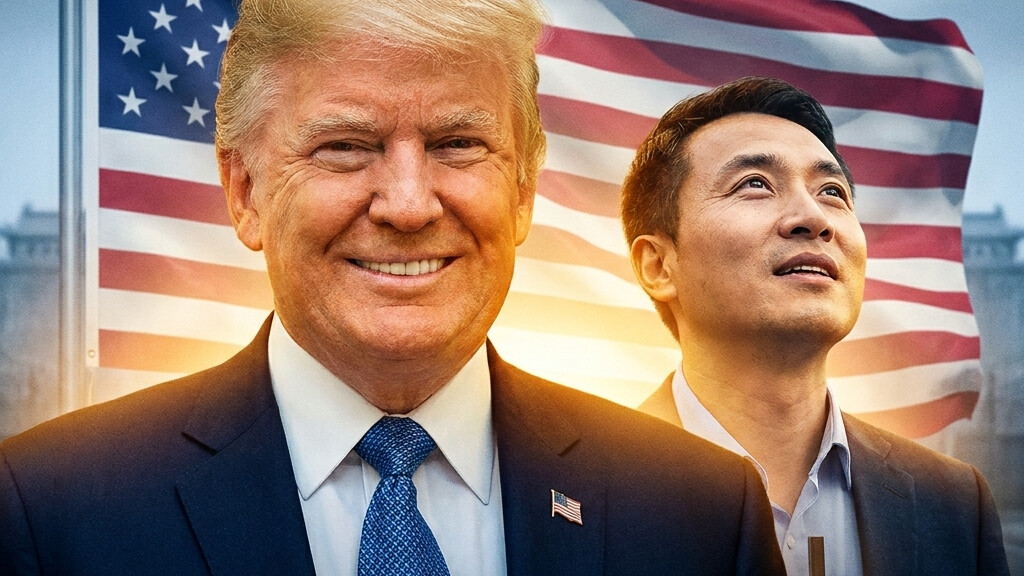
Editorial illustration
Pastor Ezra Jin Mingri walked free from a Chinese prison this week and landed in Los Angeles on Independence Day, reunited with a family that had not seen him in six years. The founder of Beijing’s Zion Church had been rotting in a cell since 2021, one of eighteen church leaders swept up in what NBC News called China’s largest crackdown on a single congregation in decades. And then President Trump made a phone call.
That is the entire story, really. Everything else is just details.
Two months ago, returning from a state visit to Beijing, Trump told reporters he had personally raised Jin’s case with Xi Jinping. “He said he’s gonna strongly consider the pastor,” Trump said at the time. The same people who mock Trump’s negotiating style — the art of the deal, the personal touch, the willingness to pick up the phone and ask for something — are conspicuously quiet now that a man of God is breathing free air instead of communist prison smog.
Jin’s daughter, Grace Jin Drexel, now a national security analyst with the Senate Republican Policy Committee, fought tirelessly for her father’s release. She testified before Congress last November, describing a church that simply wanted to worship freely with God as its head rather than the Chinese Communist Party. For that crime — for refusing to let Beijing vet their sermons and appoint their leaders — Jin was arrested, his congregation scattered, and his family torn apart.
The pastor’s family gave credit where it was due: “We thank the Trump administration for their tremendous leadership. We hope this is a signal of a positive turn for people of faith in China and relations between our two nations.”
Is it? Perhaps. But Maya Wang of Human Rights Watch reminds us that at least eight other members of Zion Church remain detained. Jimmy Lai, the 78-year-old founder of Hong Kong’s pro-democracy Apple Daily newspaper, is still serving a twenty-year sentence for “conspiring with foreign forces” — in other words, for believing that Hong Kong’s freedoms meant something. Trump acknowledged Lai’s release would be “much more difficult.” One battle at a time.
What this episode demonstrates is the difference between talking about religious freedom and actually securing it. The previous administration filled the State Department with people who could write elegant reports about persecution while accomplishing virtually nothing for the persecuted. Trump treats the issue like it matters — because to him, it does. When you have a personal relationship with Xi Jinping, when you can pick up the phone and ask for a favor, when you are willing to make human rights part of the transactional fabric of diplomacy, you get results.
Pastor Jin is free today because an American president treated his imprisonment as an affront worth addressing. That should not be remarkable. That it feels remarkable tells you everything about how low the bar had fallen.
About The Author
