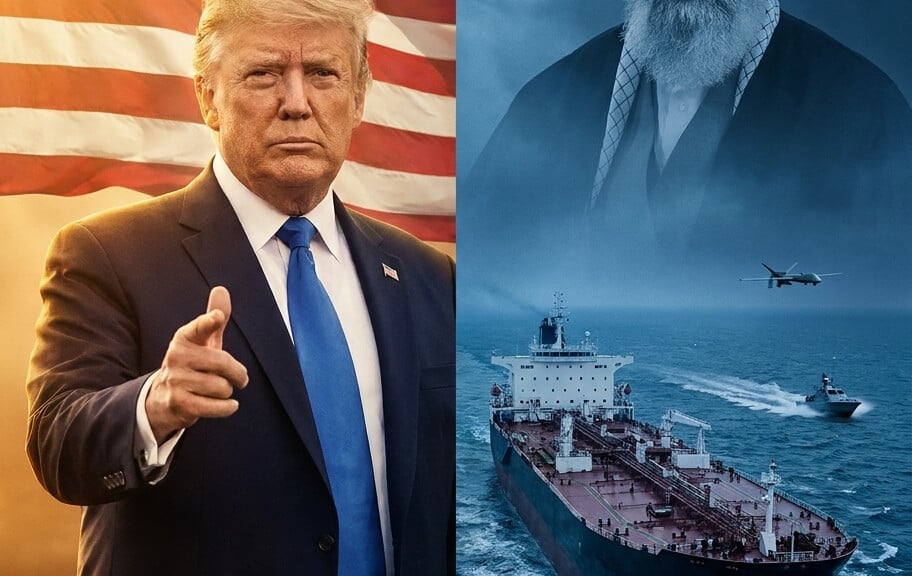
Editorial illustration
President Trump didn’t mince words Friday after a cargo ship came under attack in the Strait of Hormuz, calling it a “foolish violation” of the ceasefire agreement between Washington and Tehran. The Singapore-flagged vessel, identified as the Ever Lovely, was struck by a projectile while transiting the critical shipping lane—one of the most strategically important waterways in the world. No casualties were reported, and the ship sustained only limited damage before continuing its journey, but the message from the White House was unmistakable: play games with American interests, and there will be consequences.
According to maritime security reports, the attack occurred approximately 7.5 nautical miles southeast of Oman’s port of Dahit. The vessel was following a route designated by the UN’s International Maritime Organization when it was hit. Trump’s response on Truth Social was characteristically direct—he accused Iran of launching at least four drones at traversing ships, with one finding its mark despite American forces intercepting three of them. The president’s warning was clear: this kind of provocation tests the patience of an administration that has already shown willingness to use military force to protect American interests and international commerce.
What’s particularly telling here is the timing and the target. The Strait of Hormuz handles roughly one-fifth of the world’s oil shipments—any disruption sends shockwaves through global energy markets. Iran’s Islamic Revolutionary Guard Corps had previously warned that attempts to cross the strait along certain routes would be “unacceptable and completely dangerous,” essentially claiming territorial control over international waters. Is this the behavior of a nation interested in peace, or one probing for weakness? The UN’s International Maritime Organization has now paused its planned evacuation of more than 11,000 sailors stranded in the strait, a direct consequence of Iran’s aggression.
The broader context matters too. This comes amid ongoing tensions following the 2026 Iran war and subsequent ceasefire negotiations. Vice President JD Vance had been working to broker talks, but those efforts have faced repeated obstacles. Tehran’s pattern is familiar to anyone watching—agree to de-escalation in principle, then test boundaries with proxy actions and deniable attacks. The difference now is an American president who calls it out publicly and refuses to pretend diplomatic niceties matter more than actual security. Trump’s message to Iran is simple: keep your word, or face the consequences.
About The Author
