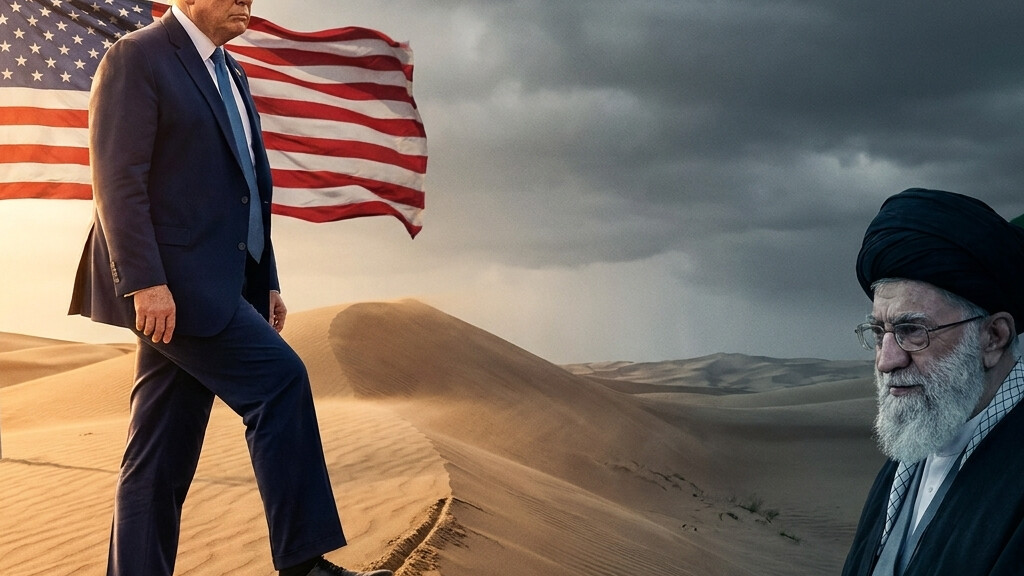
Editorial illustration
President Trump isn’t blinking. While missiles fly between Israel and Iran, and while the usual suspects in the media breathlessly count the explosions, Trump has made one thing crystal clear: American forces aren’t going anywhere until a final deal with Tehran is locked in. No premature withdrawals. No symbolic exits. Just the steady, unyielding pressure of a commander-in-chief who understands that leverage only works if you’re willing to use it.
The President told reporters Sunday that U.S. forces will remain deployed in the region until negotiations with Iran reach their conclusion. This isn’t a forever war posture—it’s a negotiation posture. And it’s exactly the kind of clarity that’s been missing from American foreign policy for decades. How many times have we watched administrations draw red lines only to erase them when the going got tough? Trump’s approach is different. The naval blockade in the Strait of Hormuz continues to choke Iran’s oil-dependent economy. The military presence remains. The message is unmistakable: we’re here, we’re serious, and we’re not leaving until you come to the table in good faith.
What’s fascinating here is how Trump’s critics still don’t understand his method. They see chaos where there’s calculation. They see impulsiveness where there’s strategy. But look at the results. Iran, which spent years thumbing its nose at American demands under previous administrations, is now actively engaged in talks. The Islamic Republic launched missiles at Israel over the weekend—yes—but Trump responded not with escalation, but with a firm warning: “You’ve shot your missiles, that’s enough. Get back to the table and make a deal.” That’s leadership. That’s restraint married to resolve.
The President also made clear that if diplomacy fails, other options remain on the table. He floated the possibility of a commando raid or continued military pressure if the Iranians walk away from negotiations. Some will call this saber-rattling. It’s not. It’s the language of deterrence—a language that rogue regimes understand far better than diplomatic niceties. When Trump says Netanyahu “doesn’t call the shots,” he’s not undermining an ally. He’s asserting American sovereignty and making clear that U.S. policy serves American interests first. Isn’t that what we elected him to do?
Behind all of this is a bigger picture that the establishment media won’t touch. The Trump doctrine isn’t about nation-building or democracy promotion or any of the neocon fantasies that burned through trillions of dollars and thousands of American lives in the Middle East. It’s about peace through strength, about making deals that actually stick, and about putting America’s interests ahead of globalist abstractions. If that means keeping troops in position a little longer to secure a lasting agreement, so be it. If it means telling both Israel and Iran to stand down while American diplomats work, that’s what he’ll do.
The path forward is clear. Iran can choose the deal—dismantling its nuclear ambitions, ending its regional terror sponsorship, and rejoining the community of civilized nations. Or it can choose continued isolation, economic strangulation, and the ever-present threat of American military might. The choice is Tehran’s. But the timeline is Trump’s. And he’s made it abundantly clear: we’re staying until the job is done.
About The Author
