Editorial illustration
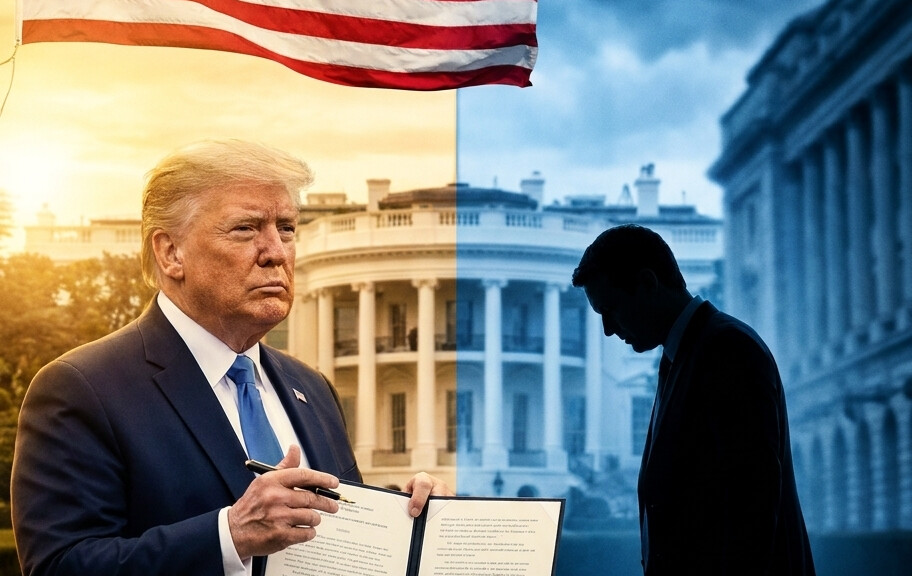
President Donald Trump signed a sweeping executive order Wednesday that fundamentally reshapes the employment landscape for thousands of federal workers, reclassifying approximately 8,000 senior policy positions as at-will employees who can be terminated without cause. The move represents one of the most significant overhauls of the federal civil service in decades and marks a major escalation in Trump’s ongoing campaign to reshape the administrative state. The executive order, signed at a White House ceremony, places affected workers into a category known as Schedule Policy/Career, covering positions with what the administration describes as “confidential, policy-determining, policy-making, or policy-advocating” responsibilities. These roles include directors, deputy directors, chiefs of staff, senior advisors, policy analysts involved in drafting regulations, public affairs leaders, legislative affairs officials, and those overseeing federal grant disbursement. Almost all affected positions are at the GS-15 pay grade or higher, with some earning up to $200,000 annually. “They’re going to be hired on the basis of merit and confidence, but if they’re messing up, then they can be removed quickly,” said James Sherk of the White House Domestic Policy Council during the signing ceremony, contrasting the new system with existing procedures that can take a year or longer to remove underperforming federal employees. The order revives and expands upon a policy known as Schedule F, which Trump issued in the final months of his first term but which saw limited implementation before the Biden administration revoked it in 2021. Unlike political appointees who serve at the pleasure of the president, career civil servants have traditionally enjoyed extensive due process protections, including the right to exhaustive appeals when facing termination. Those safeguards now evaporate for the reclassified workers, who effectively become at-will employees akin to their private sector counterparts. Since returning to the White House last year, Trump has already reduced the federal workforce by more than 300,000 people through various measures. The Office of Personnel Management had previously projected that as many as 50,000 positions could eventually be affected by the Schedule Policy/Career reclassification, though Wednesday’s order impacts a smaller initial cohort. Administration officials have not ruled out expanding the category further. Predictably, federal employee unions have erupted in opposition. Everett Kelley, president of the American Federation of Government Employees, which represents approximately 800,000 federal workers, warned that the order would have a chilling effect on employees who might otherwise report waste, fraud, or abuse. “Workers who once felt comfortable reporting waste, fraud, abuse, and mismanagement at their place of employment because they were protected from retaliation will now be afraid for their jobs if they speak out,” Kelley said in a statement. OPM Director Scott Kupor pushed back against claims that the reclassification would enable political purges or loyalty tests, insisting that workers retain whistleblower protections and can hold any political views they choose. However, Kupor made clear that the administration expects loyalty to the president’s policy agenda, not personal fealty. “You can have any political views, but if you allow those views to basically interfere with your willingness to actually carry out lawful orders and policy directives with the administration, then this provides a mechanism obviously for people in those agencies to be able to be removed effectively at will,” he told reporters. The reclassification effort has already faced multiple legal challenges from organizations including Democracy Forward, whose president Skye Perryman warned that removing due process protections ultimately harms the American people who depend on federal services. “When government experts can be fired without cause, it’s not just federal workers who are harmed,” Perryman said, “it’s the people across the country who rely on these essential services every day.” Whether the courts will allow the executive order to stand remains an open question, but the message from the Trump administration is unmistakable: the days of the permanent bureaucracy operating as an independent power center, insulated from electoral accountability, are coming to an end. For better or worse, the administrative state is being brought to heel. — **Source:** Time Magazine, White House Fact Sheet, NPR **Story ID:** trump-federal-workers-at-will-2026-06-06
About The Author
