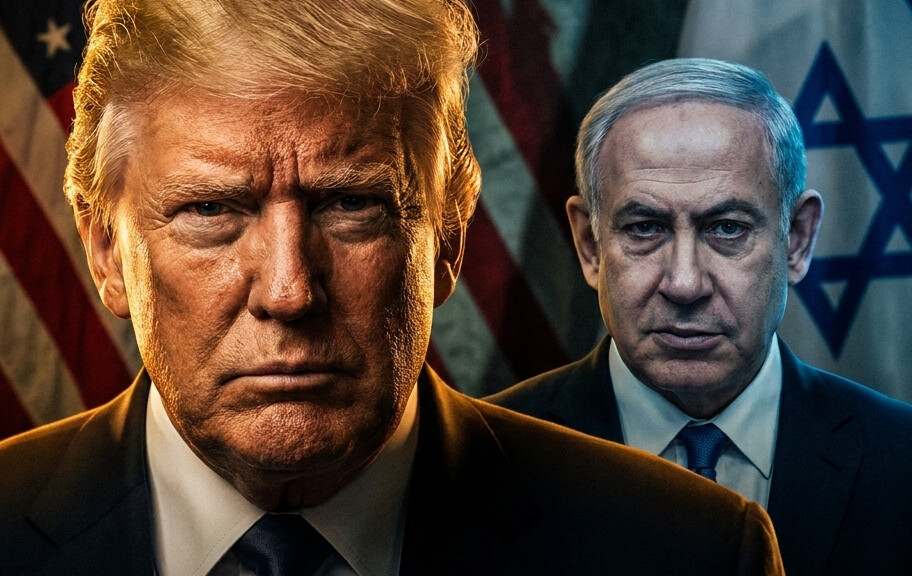
Editorial illustration
President Trump confirmed this week that he gave Israeli Prime Minister Benjamin Netanyahu an earful during a Monday phone call, admitting he was “perturbed” by Israel’s relentless military strikes in Lebanon that have continued despite Trump’s public announcement of a ceasefire agreement. The candid admission comes after Axios reported that Trump had used considerably stronger language in the private conversation, allegedly calling Netanyahu “f****** crazy” and warning that “everybody hates Israel” because of the ongoing Lebanon operations.
Speaking with New York Post columnist Miranda Devine, Trump walked back the intensity slightly but held firm on the substance. “I wouldn’t say angry. I was a little bit perturbed at his constantly fighting with Lebanon,” Trump clarified. “At some point, I said, ‘Bibi, we gotta stop this’ … but we’ve worked very well together.” The distinction between “angry” and “perturbed” may be classic Trump diplomacy, but the underlying message is unmistakable: the President wants the Lebanon campaign wrapped up, and he’s not afraid to apply pressure publicly when private conversations fail to produce results.
The friction between the two leaders exposes a recurring pattern in the Trump-Netanyahu relationship. According to reports from The Times of Israel, the United States and Israel engaged in a deliberate deception campaign before the June 2025 war with Iran, strategically leaking stories of disagreement to keep Tehran off balance while the two leaders were actually in full agreement. One has to wonder whether this latest “leak” of tension serves a similar strategic purpose, or if it reflects genuine frustration from a President who campaigned on ending foreign entanglements only to find himself managing yet another Middle Eastern conflict that refuses to stay contained.
The practical reality on the ground tells its own story. After Trump’s Monday phone call and subsequent Truth Social posts claiming Israel and Hezbollah had agreed to halt attacks, Israeli strikes in southern Lebanon continued unabated. Nine people were killed in strikes on Wednesday alone, including two paramedics. Israel’s military chief flatly stated there is “no ceasefire” for IDF forces in the area. Hezbollah, for its part, has publicly rejected any informal agreements. So much for peace through strength when the parties involved can’t even agree on whether they’re fighting or talking.
About The Author
