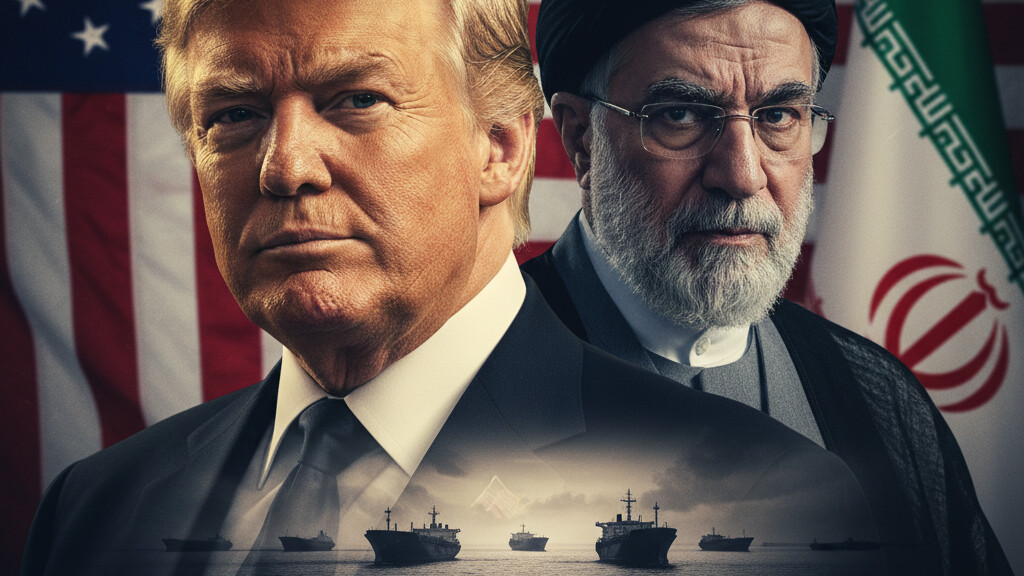
Editorial illustration
President Trump and Iran’s foreign minister announced Friday that the Strait of Hormuz has reopened, raising hopes that the warring nations may be moving toward a negotiated settlement after weeks of escalating tensions. The development comes as both sides signal willingness to pursue a diplomatic solution to the conflict that has roiled the Middle East and threatened global energy markets.
The reopening of the critical waterway, through which roughly one-fifth of the world’s oil shipments pass, represents a tangible de-escalation in a crisis that had appeared to be spiraling toward wider war. Iranian Foreign Minister Abbas Araghchi confirmed the move, while President Trump took to social media to frame the development as evidence that his maximum pressure campaign was yielding results.
According to reports from Axios and The New York Times, the United States is considering a $20 billion arrangement that would involve Iran receiving access to frozen funds in exchange for shipping its enriched uranium stockpiles out of the country. Senator Lindsey Graham told Fox News that any final agreement must include “a very, very powerful statement… that they will not have nuclear weapons.”
The potential deal structure echoes elements of the 2015 nuclear agreement that Trump withdrew from during his first term, though with significantly tougher verification measures and broader restrictions on Iran’s regional activities. Whether Tehran would accept such terms remains an open question, particularly given the deep mistrust that has characterized U.S.-Iran relations for decades.
Can a nation that has spent years building its nuclear program as both a deterrent and a bargaining chip truly be expected to surrender that leverage for promises that might be broken by the next administration? The Iranians remember well what happened to the last agreement, and any deal would need to address their legitimate concerns about American reliability.
Trump has been characteristically bullish about the prospects, suggesting a comprehensive agreement could be reached within days. “They’ve agreed to everything,” the president claimed in remarks Friday, though subsequent reports indicated significant gaps remain between the two sides’ positions.
The stakes could hardly be higher. A successful deal would remove one of the most dangerous flashpoints in global politics while potentially reshaping Middle Eastern alliances. Failure could see the conflict reignite with even greater ferocity, drawing in regional powers and potentially triggering direct military confrontation between American and Iranian forces.
About The Author
