Editorial illustration
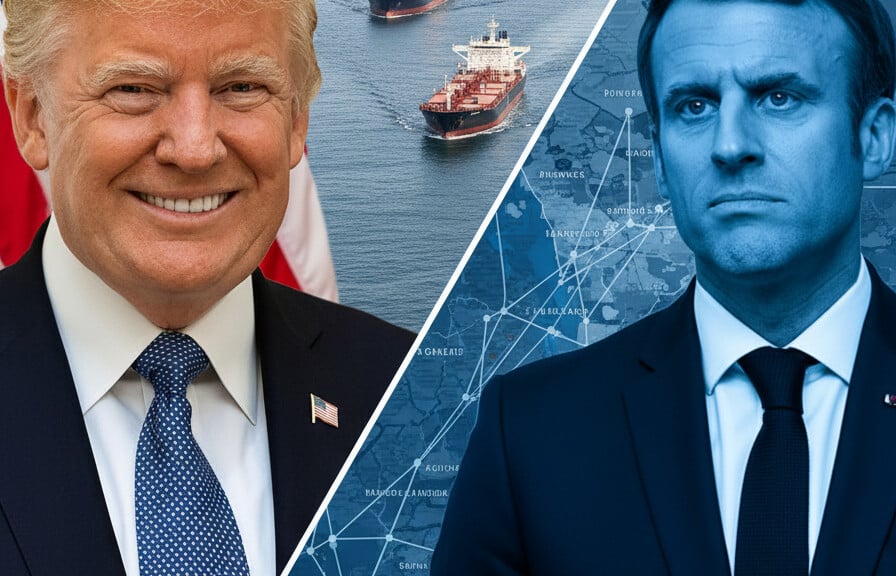
European leaders gathered in Paris on Friday for what was billed as a major diplomatic initiative, hosting a virtual conference with 50 countries to discuss a future military deployment to secure the Strait of Hormuz, only to have the wind completely knocked out of their sails by an announcement from President Trump that rendered their entire meeting largely irrelevant. While Sir Keir Starmer, Emmanuel Macron, Friedrich Merz, and Giorgia Meloni were still discussing theoretical plans to reopen the strategic waterway, Trump was already declaring the strait open for business, telling NATO leaders to ‘stay away’ unless they wanted to load up their ships with oil.
The contrast could not have been more stark. As European leaders spoke cautiously about a ‘strictly peaceful and defensive’ mission that would only deploy ‘as soon as conditions allow,’ which is diplomatic speak for ‘after the war is over and there is no longer any threat,’ Trump was busy actually solving the problem. The president wrote on Truth Social that he had already reached an understanding with Tehran to keep the vital shipping lane open, adding a characteristic jab at America’s nominal allies: ‘Now that the Hormuz Strait situation is over, I received a call from NATO asking if we would need some help. I TOLD THEM TO STAY AWAY, UNLESS THEY JUST WANT TO LOAD UP THEIR SHIPS WITH OIL. They were useless when needed, a Paper Tiger!’
Starmer attempted to recover some semblance of relevance after the meeting, saying ‘we welcome the announcement that was made during our meeting’ before quickly pivoting to claim that Europe would still need to ensure the arrangement is ‘both a lasting and a workable proposal.’ Macron, for his part, said discussions about the strait would continue with another meeting planned for next week, apparently undeterred by the fact that the crisis they were meeting about had already been resolved. The French president’s insistence on pressing forward with talks about a problem that no longer exists perfectly encapsulates the European approach to global leadership, lots of conferences, plenty of communiques, but precious little action when it matters most.
The Strait of Hormuz, through which a fifth of global seaborne oil normally flows, had been a major concern for energy markets and global economic stability. Iran’s repeated threats to close the waterway in response to American military pressure had sent oil prices spiking and raised fears of a broader regional conflict that could drag in multiple great powers. Trump’s announcement that the strait is now open, reportedly secured as part of the broader nuclear negotiations with Tehran, removes one of the major flashpoints that could have escalated the conflict beyond control.
For American taxpayers who have spent decades subsidizing European defense through NATO while watching allies fail to meet their spending commitments, Trump’s blunt dismissal of European military help must feel like vindication. Where were these European navies when American forces were conducting dangerous operations in the Persian Gulf? Why does it always seem that European leaders are eager to hold meetings and draft statements, but reluctant to actually shoulder the burdens of global security? The image of European leaders huddled in Paris discussing a theoretical future mission while Trump was securing real results in Islamabad is a perfect metaphor for the current state of Western leadership.
About The Author
