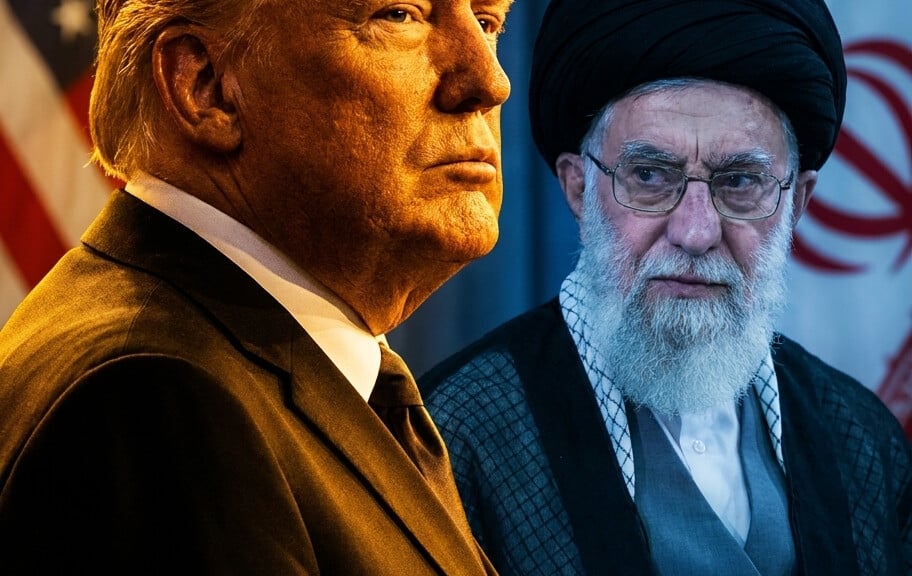
Editorial illustration
President Trump dropped a bombshell revelation Sunday aboard Air Force One, confirming that the United States had planned what would have been “the biggest attack since World War II” against Iran before he called it off at the last minute. The disclosure sent shockwaves through the press corps as Trump explained the scale of military action that was mere hours away from execution.
“We had an attack that would be the biggest attack since World War II, and it would have been disastrous for them,” Trump told reporters, his words carrying the weight of history. While the President did not explicitly mention nuclear weapons, the reference to World War II immediately evoked memories of Hiroshima and Nagasaki, the only atomic bombs ever deployed in combat. The implication was unmistakable: America was prepared to unleash devastation on a scale not seen in eight decades.
The attack was called off after urgent appeals flooded in from across the Middle East. Saudi Arabia’s Crown Prince Mohammed bin Salman, the United Arab Emirates, Qatar, and even Iran itself all pleaded with Trump to step back from the brink. “We were asked by the three primary groups, we were also asked by Iran very strongly, actually. They said we’d like to make a deal,” Trump recounted. The Iranian regime, it seems, finally understood the existential threat staring them in the face.
Trump made clear that Tehran was fully aware of what was coming. “Obviously, they don’t want to be attacked, and they knew the extent of the attack because they saw it forming.” The military buildup was not hidden; it was a show of force designed to concentrate minds in Tehran. And concentrate them it did.
Now, instead of bombs falling, diplomats will talk. Negotiations are scheduled to begin Monday afternoon, with the Strait of Hormuz and Iran’s nuclear program topping the agenda. Trump expressed hope that a peaceful resolution could be reached, noting that a deal would “save a lot of lives” and prevent the kind of destruction that could take generations to rebuild. “I don’t think it would even be buildable back,” he said of what Iran would have faced.
The President’s decision to choose diplomacy over destruction demonstrates the art of the deal in its most consequential form. Was this the masterstroke of a negotiator who understands that the credible threat of overwhelming force is often more powerful than the force itself? Or did America’s allies save Iran from a catastrophe of its own making? The talks beginning Monday will reveal whether Tehran truly intends to change course, or whether this is merely another delay tactic from a regime that has perfected the art of running out the clock.
Providence watches over the bold.
About The Author
