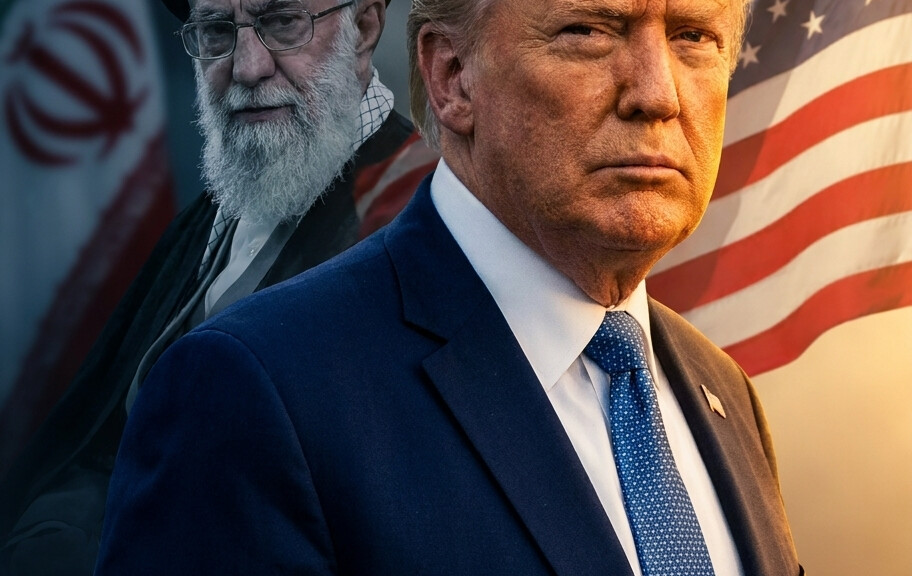
Editorial illustration
President Trump doesn’t do small, and when he revealed this weekend what he had planned for Iran, the sheer magnitude of it should give every American pause. Speaking to reporters aboard Air Force One, Trump confirmed that the United States was “all set to go” with what he described as “the biggest attack since World War II” against the Iranian regime. Let that sink in for a moment. The Commander-in-Chief had authorized a military response so massive it would have dwarfed anything we’ve seen in decades, and he walked away from it at the last possible moment.
What made him pull back? According to Trump, it wasn’t weakness or indecision—it was the direct appeals from Saudi Arabia’s Crown Prince Mohammed bin Salman, along with leaders from the UAE, Qatar, and even Iran itself. These Gulf allies, who have everything to lose if the region descends into all-out war, begged him to give diplomacy one more shot. “They said we would much prefer a deal as opposed to an attack, because you don’t know where these attacks lead,” Trump recounted. He’s not wrong. We’ve seen how quickly regional conflicts spiral beyond anyone’s control, and the Strait of Hormuz—through which a fifth of the world’s oil passes—is not a place for reckless gambles.
The scope of what Trump had planned raises serious questions about what exactly was on the table. When a president talks about the biggest attack since WWII, we’re not talking about limited airstrikes or surgical drone strikes. We’re talking about something that could reshape the Middle East for generations. Iran certainly took notice. According to Trump, the Iranians “knew the extent” of what was coming, and that knowledge apparently focused their minds considerably. New talks are scheduled to begin Monday, with discussions covering both the Strait of Hormuz and Iran’s nuclear ambitions.
For all the hand-wringing from the foreign policy establishment about Trump’s unpredictability, this episode demonstrates something they rarely acknowledge: the man knows how to wield leverage. He put Iran in a position where they had to choose between catastrophic military destruction or genuine negotiation, and they chose to talk. That’s not weakness—that’s the art of the deal played out on the world stage with nuclear stakes. The coming days will reveal whether Tehran is serious or simply playing for time, but one thing is clear: they now understand exactly who they’re dealing with.
About The Author
