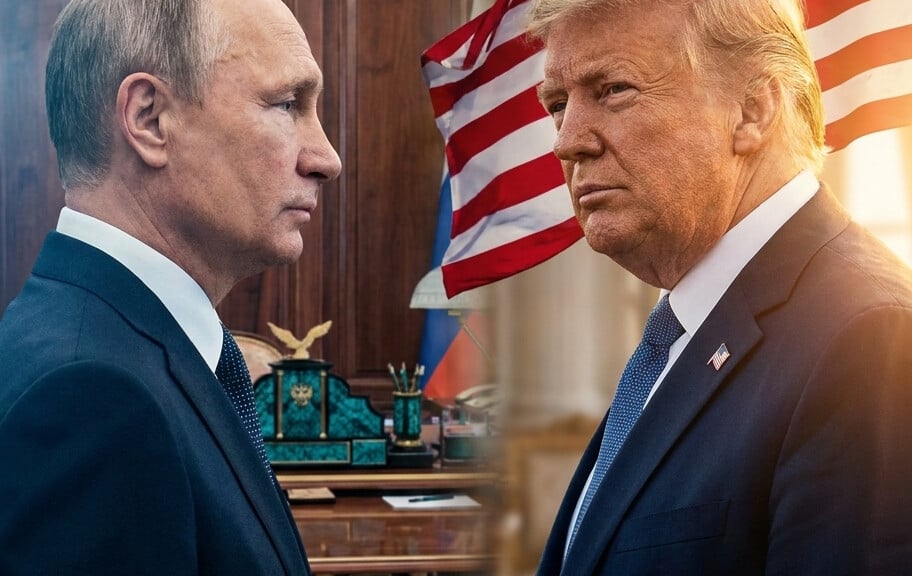
Editorial illustration
While the rest of Washington was nursing Fourth of July hangovers, President Trump was on the phone with Vladimir Putin for an hour and twenty-five minutes. The Kremlin called it “constructive” and “businesslike.” The White House hasn’t said much yet. But the timing speaks volumes—an 85-minute conversation between the leaders of the world’s two largest nuclear powers on America’s 250th birthday isn’t just protocol. It’s strategy.
Putin opened the call by congratulating Trump and the American people on the quarter-millennium mark of U.S. independence. According to Kremlin aide Yuri Ushakov, the Russian president took a moment to recall Russia’s contribution to American statehood—a reference to the fact that Russia was among the first European powers to recognize the United States in 1809 and maintained friendly relations during the Revolutionary War era. Historical footnote or diplomatic olive branch? Probably both.
But the pleasantries weren’t the point. The real substance came when the conversation turned to Ukraine. Putin reportedly shared what the Kremlin called the “real picture” of the battlefield situation—a not-so-subtle dig at the narrative coming out of Kiev and Brussels. Trump, for his part, offered American assistance in achieving peace. What form that assistance takes remains the trillion-dollar question.
Here’s what makes this call significant: it’s happening at all. For three years under Biden, direct U.S.-Russia communication was essentially frozen. The administration talked about Putin as if he were a Bond villain rather than the leader of a major power with 6,000 nuclear warheads. That approach didn’t stop the war in Ukraine, didn’t weaken Russia’s position, and didn’t bring us any closer to a resolution. It just made escalation more likely.
Trump’s approach is different. He talks to everyone. Kim Jong Un, Xi Jinping, now Putin. The foreign policy establishment hates it—they prefer their enemies isolated, sanctioned, and silent. But Trump’s theory is simple: you can’t make deals with people you refuse to speak to. And deals, not endless proxy wars, are what he’s after.
The Kremlin’s readout emphasized that both leaders acknowledged the “special responsibility” of the U.S. and Russia for maintaining global security and stability. That’s diplo-speak for “we’re the only ones who can end this war without blowing up the world.” And they’re not wrong. Ukraine’s fate will ultimately be decided in rooms like this one, not on the battlefield.
What did Trump offer? What did Putin ask for? The details haven’t leaked yet, which itself is remarkable. In Washington, everything leaks. The fact that an 85-minute call between Trump and Putin produced no immediate background quotes to friendly reporters suggests either unprecedented operational security or that both sides are keeping their powder dry.
The World Cup came up too—Putin wished Trump success hosting the tournament, which the U.S. is co-hosting through 2026. On the surface, it’s small talk. Beneath the surface, it’s recognition that sports diplomacy still matters, that national prestige still matters, and that both leaders understand the value of public gestures even while negotiating behind closed doors.
Here’s the uncomfortable truth that the neocons don’t want to admit: this call is more likely to produce peace than another $60 billion aid package to Ukraine. Not because Putin is trustworthy—he isn’t—but because peace requires negotiation, and negotiation requires talking. For three years, we’ve pretended that Russia could be talked into submission through sanctions and weapons shipments. It hasn’t worked. Maybe it’s time to try something else.
Trump’s critics will call this appeasement. They’ll warn that talking to Putin legitimizes his invasion. But legitimacy isn’t the issue anymore—the war is. And ending it, on terms that don’t involve NATO troops fighting Russian forces in Eastern Europe, should be the priority. If that takes an 85-minute phone call on Independence Day, so be it. The fireworks can wait.
About The Author
