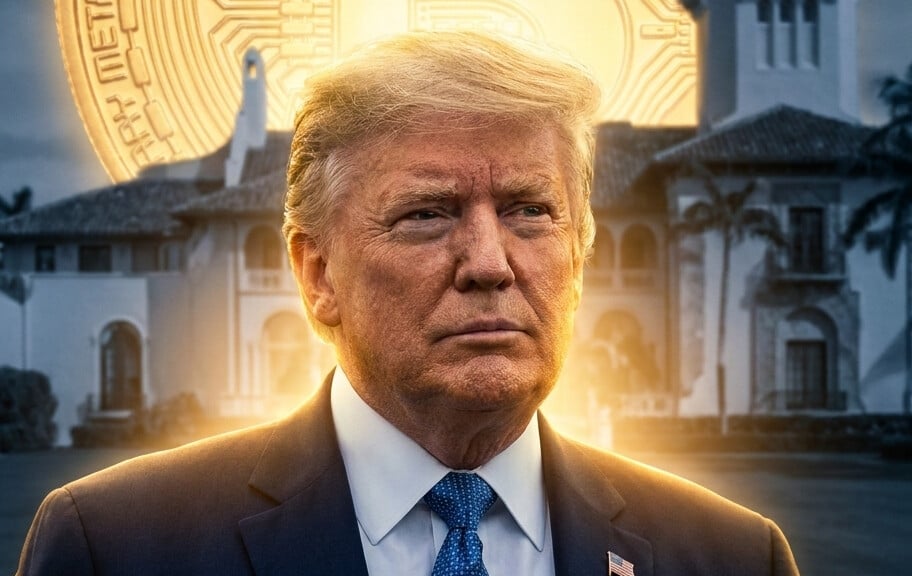
Editorial illustration
President Trump’s latest financial disclosure dropped this week, and the numbers are staggering. Nearly $1.2 billion in revenue from crypto ventures alone. Let that sink in. A presidency that was supposed to be about draining the swamp has instead become a masterclass in monetizing the office, with digital assets now eclipsing the real estate empire that took decades to build.
The breakdown reads like a crypto bro’s fever dream. World Liberty Financial, Trump’s DeFi play, pulled in over $500 million selling “governance tokens”—essentially digital coupons that give buyers voting rights on corporate decisions but zero actual ownership. Another $600 million-plus came from CIC Digital LLC, the outfit behind those Trump-branded meme coins that skyrocketed to $74 apiece before cratered to $1.68. While the President’s coffers swelled, everyday investors who bought the hype watched their holdings evaporate.
Mar-a-Lago isn’t hurting either. The Florida estate raked in $77 million last year, a 50% jump from when Trump was just another private citizen. Foreign heads of state and business titans aren’t just visiting—they’re paying premium rates for access, turning the Winter White House into the most lucrative members-only club in American politics.
The international deals are where things get murky. Vietnam’s Communist Party dispatched its deputy prime minister to greenlight a new Trump resort, with farmers reportedly pushed off their land to make room. That $5 million deal coincided with tariff relief for Hanoi. Qatar sent $5 million while securing access to advanced U.S. technology previously off-limits. Saudi Arabia, always a reliable patron, contributed $9 million through a developer tight with the royal family—right around the time they finally got those F-35 fighter jets they’d been coveting.
The White House insists there’s no conflict of interest. Spokeswoman Anna Kelly claims the President “has never engaged—or will ever engage—in conflicts of interest.” The Trump Organization says these are private deals, not government transactions. But in nations ruled by authoritarian parties and royal families, the line between private business and state interest is about as solid as a blockchain promise.
Trump himself shrugs it all off. “We’re all profiting,” he told reporters, as if the commander-in-chief cashing in on governance tokens is the same as your 401k riding the S&P 500. The difference, of course, is that your index fund doesn’t get to rewrite SEC rules or appoint the regulators who oversee the industry making you rich.
Forbes now estimates Trump’s net worth at $6 billion, up from $2.3 billion when he started his second term. The crypto windfall represents more than just personal enrichment—it symbolizes something deeper about this presidency. Where previous administrations at least pretended to separate public service from private gain, this one wears the overlap as a badge of honor.
The governance tokens and meme coins may be volatile, but one investment has paid out consistently: the bet that in Trump’s Washington, the house always wins.
About The Author
