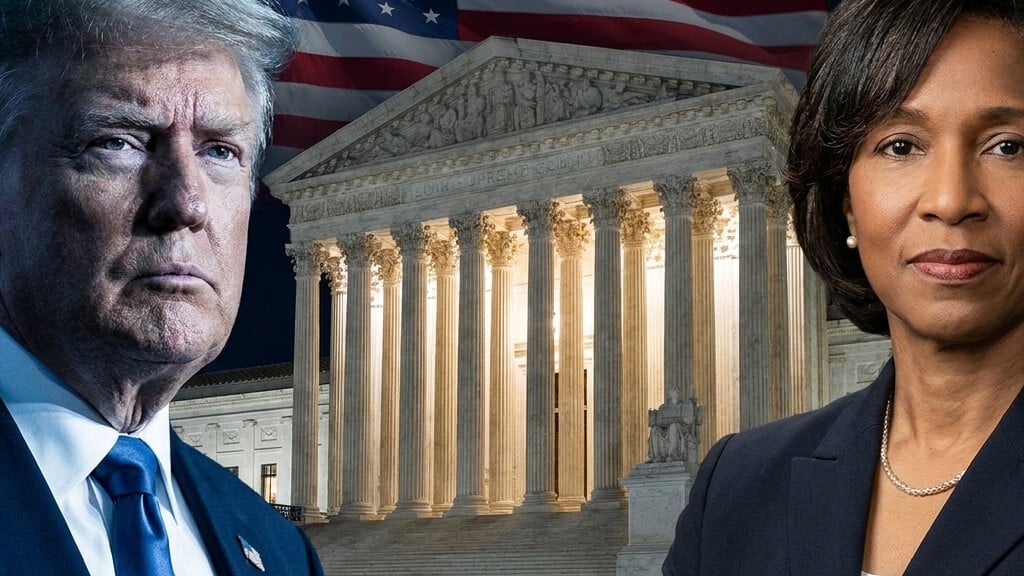
Editorial illustration
The Supreme Court delivered a sharp rebuke to President Trump on Monday, ruling that he cannot fire Federal Reserve Governor Lisa Cook without following proper procedures. In a narrow 5-4 decision, Chief Justice John Roberts sided with the court’s three liberal justices and Justice Brett Kavanaugh to preserve Cook’s position while her legal challenge proceeds through the courts.
Trump had moved to terminate Cook over allegations of mortgage fraud, claims she has vigorously denied. But the majority found that the president’s first attempt failed because Cook was never given the due process required under federal law. The ruling doesn’t permanently block her removal, but it sets a high bar for any future action. Trump would need to present evidence, allow her to respond, and provide a clear deadline, only then could courts assess whether the charges hold merit.
Roberts emphasized that the Federal Reserve was designed by Congress to operate with independence from political interference. Not just the reality of that independence matters, but the appearance of it too. When a president can remove board members at will, the central bank becomes just another political tool, and markets lose faith in its decisions. That’s why the Constitution and federal law put guardrails around these appointments.
Justices Samuel Alito and Neil Gorsuch dissented, arguing the court should not have issued such a sweeping opinion at this procedural stage. They would have let the case develop further before weighing in on the broader constitutional questions. But Roberts saw no reason to leave the public in limbo about one of the world’s most important financial institutions.
Trump responded on Truth Social with characteristic defiance, insisting the court sent the case back on strictly procedural grounds and vowing to take appropriate action immediately. He made clear this fight isn’t over, stating that someone who has committed wrongdoing should not be making vital decisions concerning the welfare of the United States.
The stakes here go beyond one governor’s job. The Federal Reserve controls interest rates that affect every mortgage, car loan, and business investment in America. If presidents could fire board members who disagree with them, monetary policy would swing wildly with every election cycle. The court’s message was clear: any change to that structure must come from Congress, not from unilateral executive action.
About The Author
