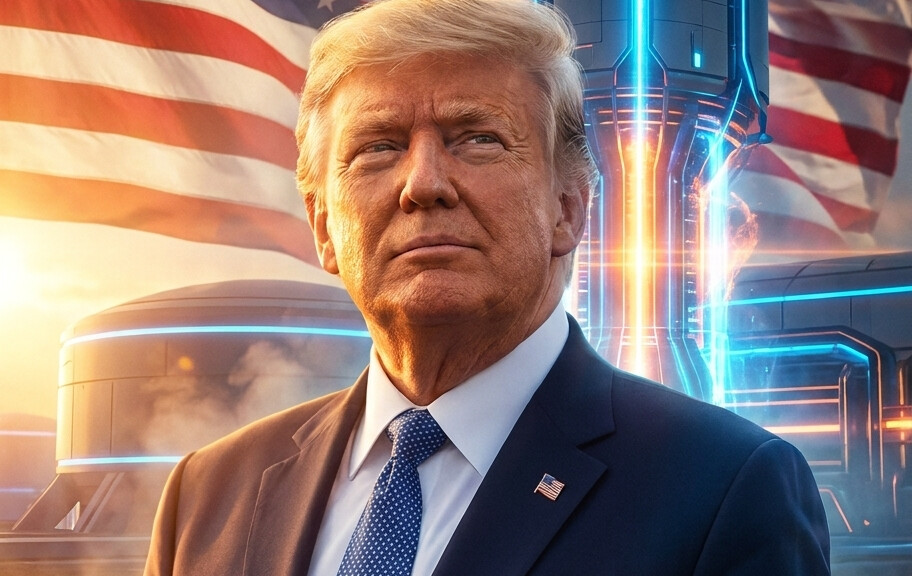
Editorial illustration
While the political class obsesses over windmills and solar panels that can’t keep the lights on when the sun sets, something remarkable happened in the American energy sector this week. Antares Nuclear’s Mark-0 microreactor achieved initial criticality under a Department of Energy pilot program, becoming the first privately developed advanced reactor to reach this milestone in more than forty years. For those who don’t speak nuclear engineer, “criticality” means the reactor achieved a self-sustaining nuclear reaction—the point where science fiction becomes power grid reality. And it happened because President Trump signed an executive order in 2025 directing the acceleration of America’s advanced nuclear program, cutting through the regulatory red tape that has strangled American energy innovation for generations.
Energy Secretary Chris Wright didn’t mince words about the significance of this achievement. “By bringing the first American non-light water privately developed reactor to criticality in more than four decades, Antares has shown what is possible when American innovation is unleashed,” Wright said in a statement. “The Trump administration is proud to support the rebirth of America’s nuclear industry and ensuring Americans have access to affordable, reliable and secure energy for generations to come.” That word—”unleashed”—is doing a lot of heavy lifting here. Because for decades, American nuclear development has been anything but unleashed. It has been chained, shackled, and buried under an avalanche of environmental impact studies, NIMBY lawsuits, and bureaucratic inertia that would make the DMV blush.
The last time America saw a new nuclear reactor design reach criticality, Jimmy Carter was in the White House and disco was still considered music. Since then, we’ve watched France generate 70% of their electricity from nuclear power while American progressives told us that the technology was too dangerous, too expensive, and too politically toxic to pursue. Germany went all-in on renewables and ended up burning more coal to keep the lights on. California can’t keep the grid stable during a heat wave. And through it all, the same voices who claim to care about carbon emissions have fought nuclear power with a religious fervor that would make the Puritans proud.
But here’s the thing about nuclear energy that the green movement never wants to admit: it works. It produces reliable, baseload power that doesn’t depend on the weather. It emits zero carbon dioxide during operation. A single uranium fuel pellet the size of your fingertip contains as much energy as a ton of coal, 149 gallons of oil, or 17,000 cubic feet of natural gas. The math isn’t just favorable—it’s overwhelming. And yet, until now, American companies have had to navigate a regulatory maze so convoluted that many simply gave up and took their innovations overseas.
The Antares achievement validates what conservatives have been saying for years: when you get government out of the way, American ingenuity solves problems that the rest of the world considers impossible. This isn’t about subsidizing failure like Solyndra or throwing billions at electric vehicles that working families can’t afford. This is about clearing the path for private companies to develop technologies that actually benefit the American people. The Mark-0 microreactor is a small modular design, meaning it can be manufactured in factories and deployed where needed—rural communities, military bases, disaster relief zones. It’s the kind of flexible, scalable solution that centralized government planning could never conceive, let alone execute.
President Trump understood something that his predecessors either failed to grasp or actively opposed: energy security is national security. When America depends on foreign oil, foreign uranium, or foreign supply chains for critical technology, we are vulnerable. When we can generate our own power using domestic resources and American engineering, we are strong. The executive order that made this milestone possible wasn’t just about electricity—it was about independence. It was about telling the world that America will not be held hostage by energy markets controlled by regimes that hate us.
The critics will say this is dangerous. They’ll trot out Chernobyl and Fukushima, ignoring the fact that both disasters involved obsolete designs, communist mismanagement, or natural disasters of biblical proportions. They’ll claim nuclear waste is an unsolvable problem, even though France has been reprocessing spent fuel for decades and the actual volume of high-level waste from sixty years of American nuclear power would fit on a single football field. They’ll demand more studies, more delays, more opportunities for lawyers to file injunctions while America falls further behind. But the truth is, nuclear power is the safest form of energy generation per kilowatt-hour when you account for the deaths from air pollution caused by fossil fuels and the industrial accidents associated with every other power source.
What happens next matters. One reactor achieving criticality is a milestone, but it’s not a revolution. For nuclear power to transform American energy, we need dozens of these reactors, then hundreds. We need a supply chain that doesn’t depend on Russian uranium or Chinese processing. We need a workforce trained in nuclear engineering, not gender studies. And we need a political class that recognizes that America’s energy future isn’t going to be built on dreams and good intentions—it’s going to be built on atoms, split and harnessed by American hands.
The Antares Mark-0 is a beginning. After forty years of stagnation, America is building again. And if we have the wisdom to keep government interference to a minimum and American innovation unleashed, this could be the moment future historians point to as the beginning of an energy renaissance that powered the next American century. The skeptics said it couldn’t happen. They were wrong. They usually are.
About The Author
